Secrets of Huqoq Revealed: New exhibition provides the first public glimpse of an ancient Jewish village, its synagogue, and mosaics

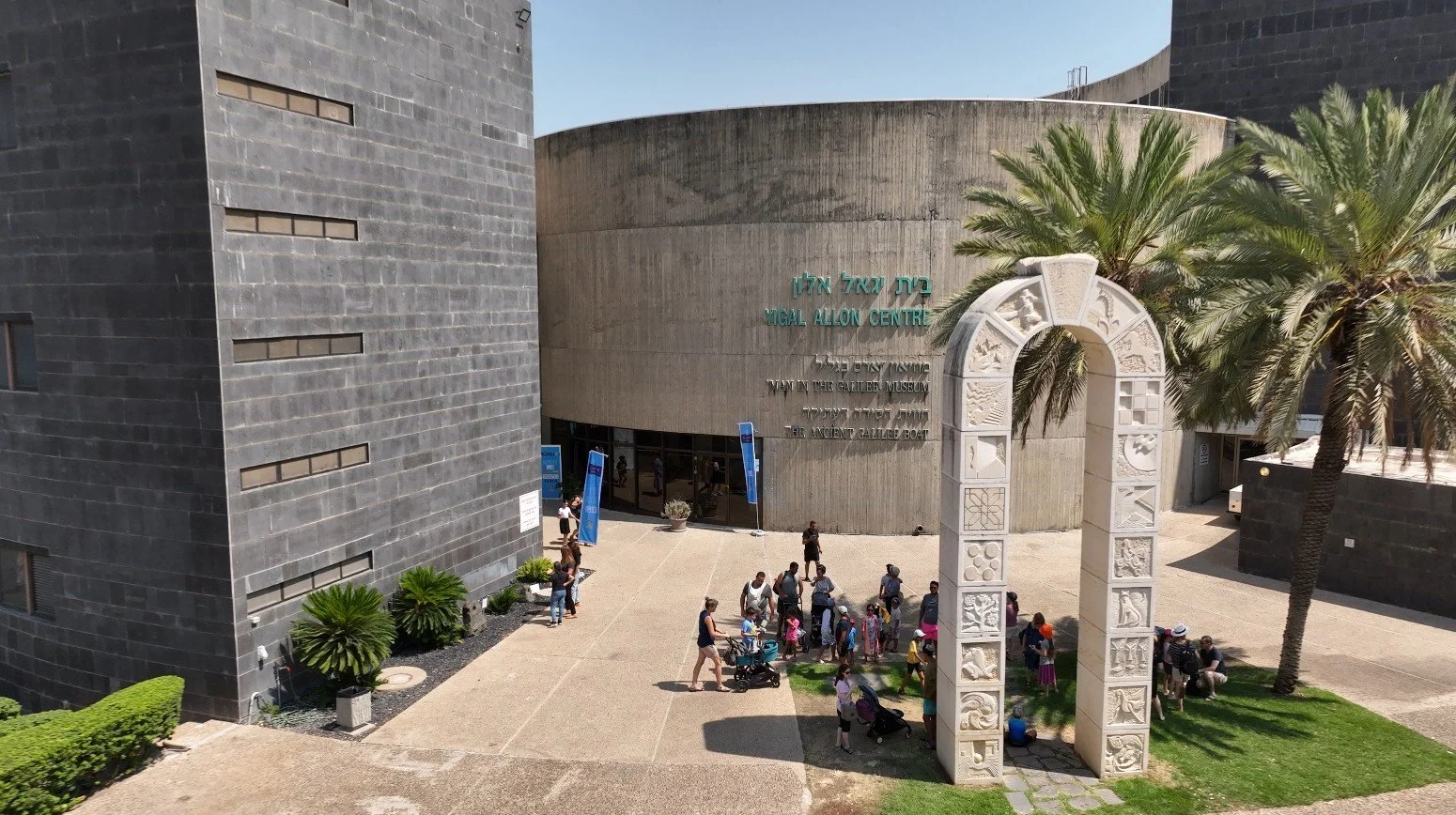
The new artifact and photographic exhibition housed at the Yigal Allon Center, on the shores of the Sea of Galilee and overlooking the Horvat Huqoq site in the lovely Amiad Forest, acts as a preliminary visitor center while direct site access is in preparation. The centerpiece: the original Samson floor mosaic, alongside a bronze coin cache’s premier public display.

Yigal Allon Center Museum. Photo: Emil Aladjem, Israel Antiquities Authority

“Secrets of Huqoq” – a new exhibition mounted at the Yigal Allon Center Museum in Kibbutz Ginosar, offers the public its first glimpse into one of the most intriguing and spectacular archaeological sites uncovered in Israel in recent years. The exhibition – a joint initiative of the Jewish National Fund (KKL), the W. F. Albright Institute of Archaeological Research, supported by the U.S. government, and the Israel Antiquities Authority, invites the public to discover the ruins of Huqoq – a flourishing ancient Jewish village reaching its zenith in the Roman-Byzantine period, set in the heart of the Amiad Forest, in an open space near the Huqoq Spring.

Horvat Huqoq, visible from the museum’s windows, is best known for the impressive ancient synagogue uncovered by the Huqoq expedition excavations, led by Professor Jodi Magness of the University of North Carolina at Chapel Hill. Extraordinary in their beauty and narrative richness, including rare biblical and extra-biblical scenes, the range of the Huqoq mosaics are unequalled by any other synagogue in Israel.

The Secrets of Huqoq exhibition at the Yigal Allon Center. Photo: Einat Ambar-Armon, Israel Antiquities Authority

At the center of the new exhibition is the original Samson Mosaic – the only one of the mosaics currently on public display. Showing Samson carrying the gates of the city of Gaza on his shoulders, alongside it are spectacular photographs of the other floor mosaics from the site, courtesy of their excavator, Professor Magness.

According to Professor Jodi Magness of the University of North Carolina at Chapel Hill: “The Huqoq mosaics are some of the most exciting and moving finds I have ever been privileged to unearth. I am delighted that the original Samson mosaic, alongside images of the site’s many other mosaics, are being displayed to the public so close to where they were found. For me, they are still part of an ongoing research effort, and therefore this exhibition invites the public to join the journey of discovery as it unfolds.”

The exhibition seeks to broaden the perspective beyond the mosaics themselves by presenting Huqoq as an encompassing living environment: a village, a community, a spring, agricultural installations, ritual baths—mikvehs, a hidden underground escape network, and the open landscape around them. Through archaeological finds, photographs, a small-scale model of the settlement, and an experiential space simulating part of its underground world, visitors enter the story of a town whose discoveries are still coming to light.

Prof. Yinon Shivtiel beside a coin hoard, an iron knife, and a bronze ring discovered in the hiding complex at Huqoq, during excavations by the Israel Antiquities Authority and Safed Academic College.  Photo: Einat Ambar-Armon, Israel Antiquities Authority

Alongside the exquisitely detailed mosaic, the exhibition also publicly features, for the very first time, a hoard of bronze coins. Israel Antiquities Authority excavations discovered them within a hidden escape system that is contemporary with the synagogue. This hoard joins other finds revealed within this system, including a ring and a dagger, and sheds light on another aspect of Jewish community life here during times of hardship, and secrecy under the life-and-death threat for being faithful to tradition and identity.

In recent years, Huqoq has also become the focus of broad educational and community programs led by the Israel Antiquities Authority’s northern region education division, in full collaboration with the KKL-JNF. Students, families, soldiers, volunteers, and area residents participated in excavations, sifting, and field activities, all becoming part of the site’s discovery process and thus fostering the renewed connection to its story.

Exhibition curator Dr. Einat Ambar-Armon with part of the synagogue model during its construction. Photo: Israel Antiquities Authority

According to Dr. Einat Ambar-Armon, Israel Antiquities Authority Exhibition Curator: “Huqoq is a small site telling a big story: about a living Jewish Galilee community in the Roman-Byzantine period, about an extraordinary artistic creation, and about an entire region whose life revolved around the synagogue. Since preparing the site itself for public visitation is expected to take several more years, our exhibition already serves as a first gateway to the village of Huqoq and to the archaeological and human story it reveals, located near and within sight of the real place.

The exhibition opening is part of the museum broadening its scope: the second floor is now defined as the archaeology floor, entitled ‘When Galilee was the Center.’ Alongside the adjacent ‘Sanhedrin Trail’ exhibition, ‘Secrets of Huqoq’ enables the visitor to see the town’s heritage within the lens of a broader picture – the Galilee as a space of Jewish life, creativity, community and study during the Roman-Byzantine period, as the Mishna and Jerusalem Talmud developed here in this region.”

According to KKL-JNF Chairman Eyal Ostrinsky, “The ‘Secrets of Huqoq’ exhibition is an invitation to embark upon a fascinating journey to one of the most impressive archaeological sites ever discovered in Israel. Preserving heritage and making it publicly accessible is an integral part of KKL-JNF's mission to connect people, the land, and its history. Along with preserving the landscape and open spaces, we work to ensure that the cultural and historical treasures of the Land of Israel will continue to tell the story of the Jewish people for generations to come.”

According to Eli Escusido, Director General of the Israel Antiquities Authority, “Huqoq is one of the most important and intriguing sites uncovered in the Galilee in recent years. It opens a rare window into the region's past during the Roman-Byzantine period. The exhibition at the Yigal Allon Center creates an opportunity to bring to the general public the story of a site that is still undergoing research, preservation, and development. This is an expression of the role of the Israel Antiquities Authority: not only to uncover findings, but to make the past accessible and meaningful for the entire public.”

According to Israeli Minister of Heritage Rabbi Amichai Eliyahu, “The spectacular Huqoq finds and mosaics are the living voice of a Jewish community that dwelt here in the Galilee some 1,600 years ago, gathered in their synagogue, read, told and taught the stories of the Bible uniquely reinforced by the images around them, and left behind for us a profound testimony to Jewish identity, faith, and roots in the Land of Israel. The ‘Secrets of Huqoq’ exhibition connects the public to this continuum – from this ancient Galilee village to the present-day State of Israel – and expresses our commitment to preserving, researching, and making accessible the heritage of the Jewish people in their land for all to see.”

According to Dr. James Fraser, Dorot Director of the W.F. Albright Institute of Archaeological Research: “The opening of the Yigal Allon Center exhibition, alongside the start of conservation and documentation work at the Huqoq site itself, and, the development of a new website dedicated to the site's findings, mark an important stage in a multifaceted process to reveal the rich Huqoq story to the public. We are proud to be key partners in this rewarding enterprise, made possible in part thanks to the support of the United States Embassy in Israel and the United States Department of State. This vital assistance expresses international cooperation in the research, preservation, and accessibility of cultural heritage – at a symbolic time when the United States is celebrating 250 years of its own independence.”


According to Dani Zamir, Yigal Allon Center CEO, and Oshrat Siso, Museum Director, “‘Secrets of Huqoq’ connects heritage, a museum experience and the Galilee landscape, and plays a part in a broader process of renewing our museum and deepening its place as a gateway to the Galilee story. The fact that
the site itself is visible from the museum windows transforms the visit here into an invitation to see Huqoq not only as a find from the past, but as part of the living story of the Galilee.”


Opening Hours: Sunday–Thursday, 8:00 AM–4:00 PM

Banner image: Samson carrying the gates of Gaza on his shoulders. The original mosaic from Huqoq is on display in the exhibition at the Yigal Allon Center. Photo: Einat Ambar-Armon, Israel Antiquities Authority.

Where Did the Dead Sea Scrolls Come From?

A New ERC-Funded International Project Combines Artificial Intelligence and Chemical Analysis to Trace the Origins of the Dead Sea Scrolls

The European Research Council (ERC) has awarded Professor Mladen Popović of the University of Groningen a €2.5 million Advanced Grant for a five-year international research project that will investigate one of the most fundamental questions in Dead Sea Scrolls scholarship: where were the scrolls produced and copied, and what can their origins reveal about centers of learning, scribal culture, and the transmission of knowledge in ancient Judea?

The project, Tracing Scribes and Scrolls, brings together researchers from the University of Groningen, the Israel Antiquities Authority, and leading laboratories and research institutions across Europe. By combining state-of-the-art chemical analysis, artificial intelligence, paleography, and codicology, the research aims to reconstruct the geographical and cultural contexts in which the scrolls were produced.

A fragment of a 2,000-year-old Psalms Scroll. Photo: Yoli Schwartz, Israel Antiquities Authority.

The Dead Sea Scrolls, under the guardianship of the Israel Antiquities Authority in Jerusalem, comprise one of the most significant archaeological discoveries of the twentieth century. They include the earliest known manuscripts of many books of the Hebrew Bible, together with a remarkable collection of Jewish literary works dating from the late Second Temple period. Despite decades of research, the precise locations where many of the scrolls were manufactured, prepared, and copied remain unknown.

Were at least some of the scrolls written at Qumran by a Jewish community living in seclusion there? Were others brought from additional centers of scribal activity in Judea, perhaps from Jerusalem, and hidden in the caves in times of danger? Or did the caves also serve as a library, or as a kind of ancient genizah? These questions stand at the heart of the new project.

Professor Popović, one of the world's leading authorities on the Dead Sea Scrolls, will lead a multidisciplinary team of historians, archaeologists, material scientists, chemists, and artificial intelligence specialists over the next five years. ERC Advanced Grants are among Europe's most prestigious research awards, supporting internationally recognized researchers in pursuing ambitious, high-impact scientific research.

Working in close collaboration with the Israel Antiquities Authority, the team will analyze approximately 250 samples from the Authority's Dead Sea Scrolls collection, including parchment, papyrus, and ink. For the first time, papyri from Egypt will be examined alongside papyri from Qumran and other Judean Desert sites, allowing researchers to compare their chemical signatures directly. These analyses are expected to help identify the material “fingerprints” of the scrolls, reveal the provenance of raw materials, identify production practices, and uncover connections between different centers of scribal activity.

The chemical data will be processed using advanced artificial intelligence tools capable of identifying complex patterns that are difficult to detect through conventional analysis. These results will then be integrated with paleographic studies of handwriting, codicological analysis of the physical construction of the scrolls—including sheet preparation, column layout, margins, and stitching techniques—as well as linguistic and literary evidence.

Together, these complementary approaches will enable researchers to develop an unprecedented model for mapping the more than 25,000 Dead Sea Scroll fragments preserved by the Israel Antiquities Authority. The project aims to place individual manuscripts and scribes within their geographical and chronological contexts while identifying centers of writing, learning, literary production, and knowledge transmission in ancient Judea—and potentially beyond.

Approximately 25,000 scroll fragments are treated and preserved by the Israel Antiquities Authority’s Judean Desert Scrolls Unit in Jerusalem. Photo: Shai Halevi, Israel Antiquities Authority.

According to Professor Mladen Popović of the University of Groningen, Principal Investigator of the project: "This is the largest research project to date to use artificial intelligence to investigate the cultural context of the Dead Sea Scrolls. These manuscripts provide an extraordinary window into the intellectual world of ancient Judea. By combining advanced laboratory analysis with the study of ancient handwriting and the remarkable advances in artificial intelligence made in recent years, we are now able to address questions that were previously beyond our reach: who copied these manuscripts, where they were produced, how knowledge circulated, and the role these texts played within the society of their time."

The project builds on Professor Popović's previous ERC-funded project, The Hands That Wrote the Bible, which pioneered the use of artificial intelligence to identify individual scribes responsible for copying the Dead Sea Scrolls. Tracing Scribes and Scrolls expands this work by moving beyond the identification of scribal hands to investigate where scribes worked, the materials they used, and the broader cultural and intellectual networks in which the manuscripts were created and circulated.

Dr. Ilit Cohen-Ofri, the research partner on behalf of the Israel Antiquities Authority. Photo: Yoli Schwartz, Israel Antiquities Authority.


Dr. Ilit Cohen-Ofri of the Israel Antiquities Authority
and one of the collaborators on the project, said: "The research will create an unprecedented database on the chemical composition of samples from the Dead Sea Scrolls. The Israel Antiquities Authority is entrusted with the preservation, documentation, and study of the Dead Sea Scrolls, and we continue to invest significant effort in advancing their scientific investigation. In recent years we have come to recognize the wealth of information that can be recovered from the materials themselves—parchment, papyrus, and ink—revealing hidden insights preserved within thousands of manuscript fragments that have survived for more than two millennia. Participating in an international project of this scale enables the Israel Antiquities Authority to contribute its expertise in material analysis of artifacts to some of the most important questions in Dead Sea Scrolls research, benefiting both the scholarly community and the broader public."

The project brings together team members and laboratories at the Israel Antiquities Authority in Jerusalem (Dr. Ilit Cohen-Ofri), the University of Pisa (Ilaria Degano), the University of Naples Federico II (Leila Birolo), and the University of Southern Denmark in Odense (Kaare Rasmussen and Frank Kjeldsen). At the University of Groningen, Dr. Maruf Dhali plays a central role in developing and implementing the artificial intelligence methods that will integrate the project's chemical data and identify patterns of provenance and scribal affiliation. The project also includes collaborations with the Egyptian Museums in Berlin and Turin, as well as KU Leuven, as part of a comparative study of papyri from Egypt and the Judean Desert.

Banner image: The Qumran caves in the Judean Desert, among the main sites where the Dead Sea Scrolls were discovered. The new international research project seeks to trace the origins of the ancient manuscripts. Photo: Shai Halevi, Israel Antiquities Authority.

Ancient intact and magnificent marble statues, 1700 years old, were discovered adjacent to Binyamina

The statues were unearthed in an Israel Antiquities Authority archaeological excavation prior to constructing the coastal high-speed railway for the Ministry of Transportation and Israel Railways High-Speed Coastal Railway Project * “They may have decorated the villa of one of Caesarea’s wealthiest people,” say the researchers. This is a once-in-a-lifetime discovery” * The findings will be presented to the public for the first time at the Seventh Annual Central Region archaeological conference “Center VII – The Domestic House”, scheduled for June 18 at Tel Aviv’s MUZA – Eretz Israel Museum.

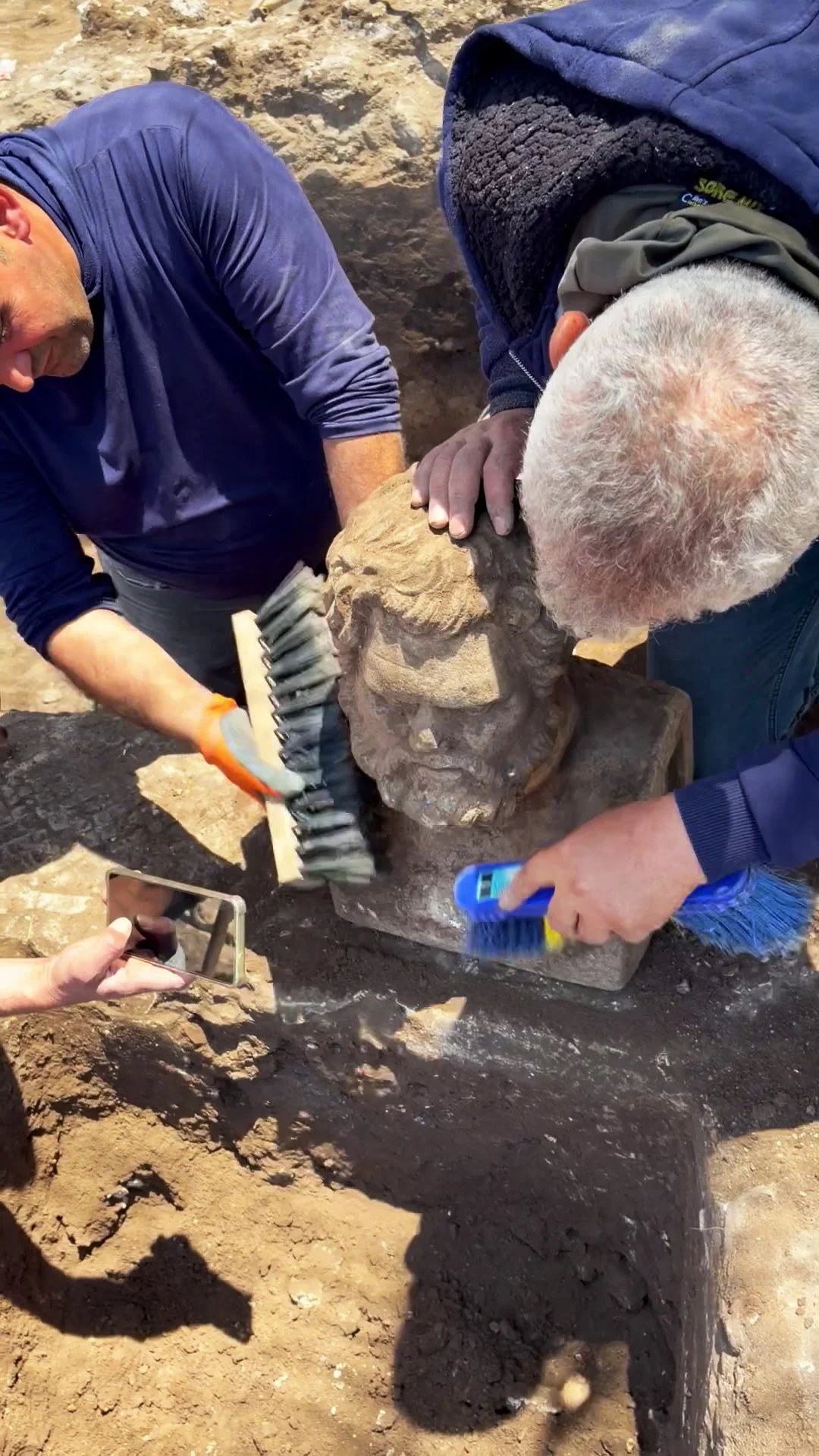
The statues uncovered by the Israel Antiquities Authority excavation. Photo: Assaf Peretz, Israel Antiquities Authority

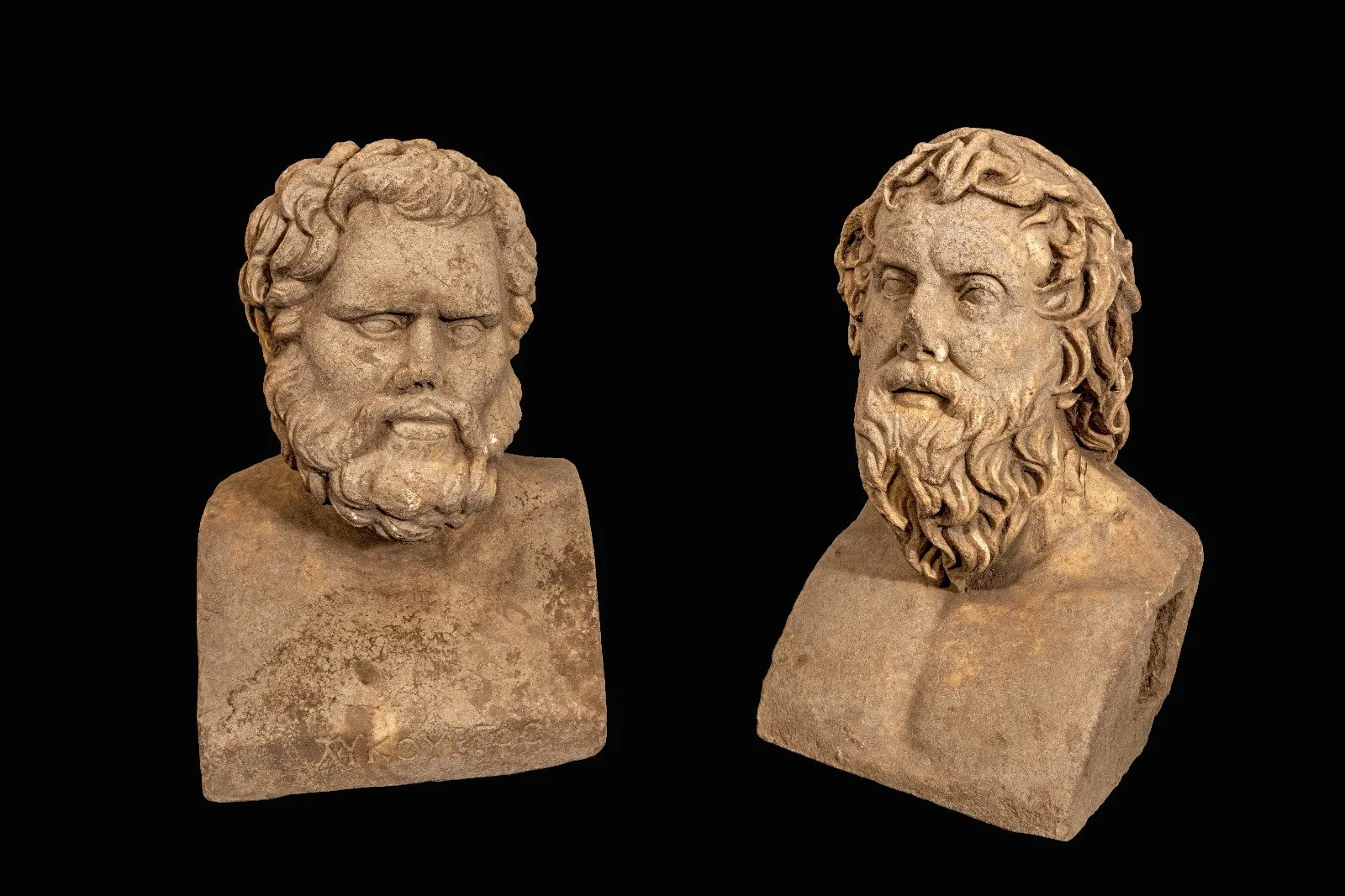
A spectacular archaeological discovery in Binyamina: Two marble statues (protomes, human head and upper torso), approximately 1,700 years old, depicting historical figures from the Greco-Roman world, were found buried in a wine collection pit of a Roman-Byzantine winepress. A Greek inscription bearing the name “Lycurgus“ was preserved on one of the statues. The protomes were uncovered in an archaeological excavation directed by the Israel Antiquities Authority as part of the “Connecting Israel” project led by the Ministry of Transportation and Israel Railways to double the coastal rail lines (National Infrastructure Plan 65), adding high-speed 250 km/h trains that will reduce Haifa –Tel Aviv travel time to only half an hour, and thus creating the “High-Speed Coastal Railway”.

The spectacular statues will be unveiled for the first time at the “Center VII -The Domestic House” annual archaeological conference scheduled for Thursday, June 18 at Tel Aviv’s MUZA – Eretz Israel Museum, in collaboration with the Central Region of the Israel Antiquities Authority, The Sonia and Marco Nadler Institute of Archaeology at Tel Aviv University, the Institute of Archaeology of the Martin (Szusz) Department of Land of Israel Studies and Archaeology at Bar-Ilan University, and MUZA. The statues will be on public display at the museum throughout the summer months.

“The statues date back to the Roman period, and interestingly, they were not discovered in situ where they once stood! Mysteriously, they were found neatly laid, face down, inside a wine-collection pit of a Roman-Byzantine period winepress; meaning they were buried when it went out of use. At present, it is not known why the statues were hidden here – perhaps to preserve them,“ say Eliran Oren and Avishag Reiss, excavation directors on behalf of the Israel Antiquities Authority.

"While digging the winepress, something was sticking out of the ground, and the workers called me,” says Michael Sorotskin, archaeologist for the Israel Antiquities Authority. “There was a feeling that we were about to discover something that really shouldn't be there. Suddenly we saw that this was not the usual pottery – it was marble! Then, slowly, slowly, the two statues were revealed. I'm still struggling to find the right words. It is simply wondrous.”

Cleaning a statue after its discovery. Photo: Eliran Oren, Israel Antiquities Authority

“This is a once-in-a-lifetime discovery,” add the excavation directors, Oren and Reiss. “It was very unexpected, but somehow, the really big discoveries always turn up on the excavation’s very last day.”

According to Dr. Peter Gendelman, a Caesarea region expert from the Israel Antiquities Authority, “These statues now join a series of historical figure portraits previously discovered in Caesarea. The last time such a figure was discovered here was in the 1990s. One protome bears a Greek inscription preserving the name of Lycurgus. Two significant people with this name are known from Greek history – Lycurgus of Sparta, its founder; and Lycurgus of Athens, a famed 4th century BCE statesman and orator. Possibly this statue may prove to be of one of these two historical figures, but our research is just beginning.”

Dr. Gendelman adds, “During the Roman period, statues of this type were displayed both in public buildings and in the homes of the elite, who sought to connect themselves to the cultural and spiritual world of antiquity. Not far from the discovery site, remains of a bathhouse were previously uncovered, and it is possible that the statues decorated a luxurious villa of a Caesarea resident.”

After their initial public display, the statues will undergo a process of cleaning, conservation, and further research, during which scholars will attempt to identify with certainty whom they depict, and the exact ancient context in which they were originally placed.

One of the statues during initial conservation treatment in the Israel Antiquities Authority laboratories. Photo: Emil Aladjem, Israel Antiquities Authority
According to Gil Omer, Director General of MUZA – Eretz Israel Museum, Tel Aviv: “It is not every day that 1,700-year-old marble statues are uncovered in such an impressive state of preservation. We are proud to be the place where the public will be able to encounter this extraordinary discovery for the first time, and to continue seeing it after the conference as well. Presenting the statues in MUZA’s Ceramics Pavilion is a rare opportunity to introduce visitors to an exceptional archaeological find shortly after its discovery, and to connect them with a fascinating story.”

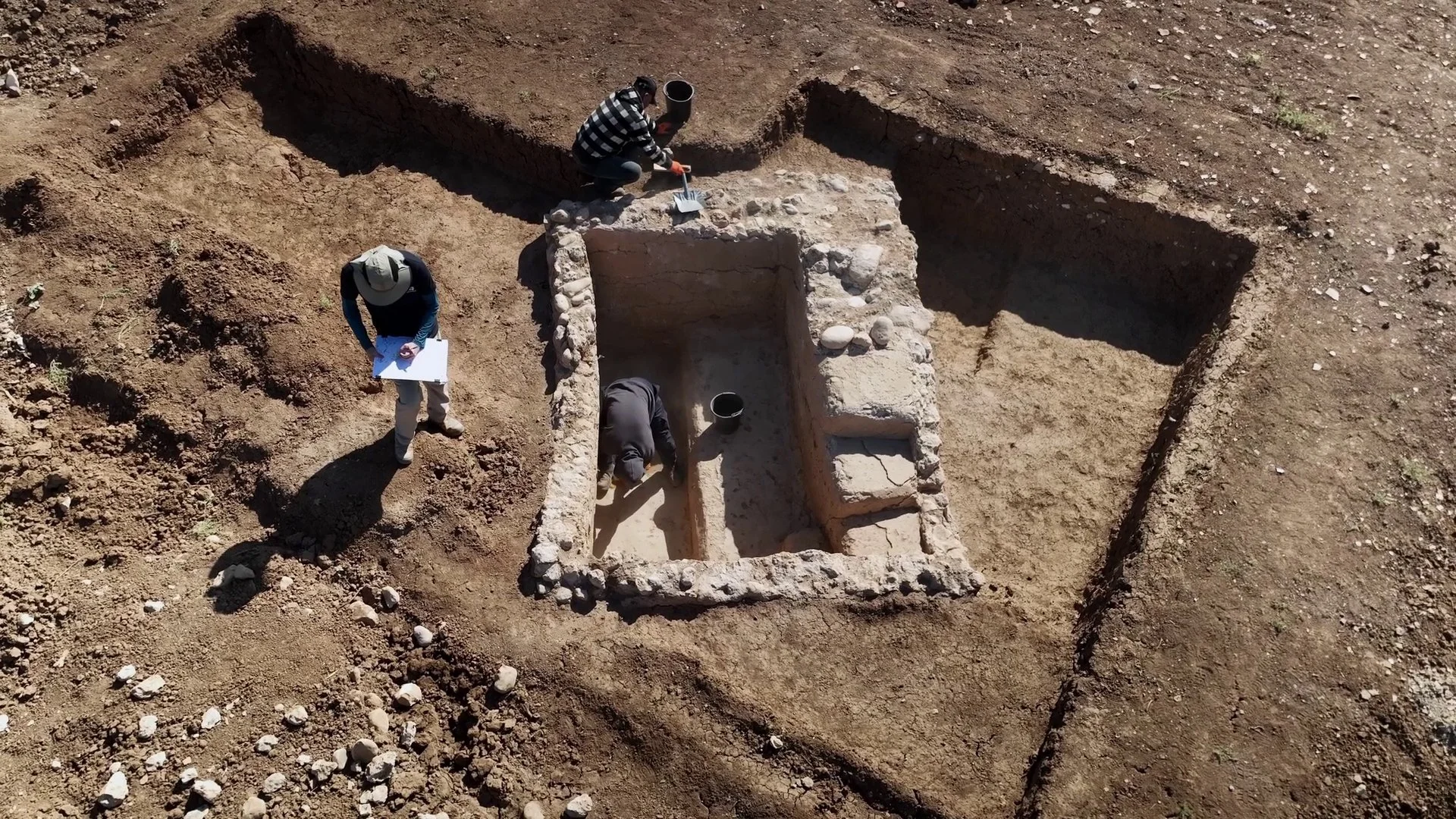
From top to bottom – archaeologists Eliran Oren, Avishag Reiss and Michael Sorotskin from the Israel Antiquities Authority. Photo: Nohar Shahar, Israel Antiquities Authority

Yelena Elgart-Sharon, Curator of the Ceramics Pavilion at MUZA: “The statues recently uncovered in the Israel Antiquities Authority excavation near Binyamina offer the public a rare opportunity to take part in the process of revealing the past almost in real time. We are proud to host and display this unique find at MUZA shortly after its discovery. The display, together with the ‘In Centro’ conference that will take place at the museum on June 18 in partnership with the Israel Antiquities Authority, reflects the ongoing collaboration between the two institutions and their shared commitment to making archaeology accessible to the public.”

Israeli Minister of Heritage Rabbi Amichai Eliyahu shares: “This revelation is the kind of discovery that demonstrates to the public the power of archaeology – one moment we are working on a modern infrastructure project, and the next moment a window opens into the lives and cultural world of those who lived right here many hundreds of years ago. The role of the State of Israel is to preserve these findings of all cultures, research them, and make them accessible to the public – so that everyone can encounter and form their own close-up impressions of our country’s rich and broad past.”

The magnificent sculptures’ initial public presentation at the seventh annual “In the Center” archaeological conference, in the context of this year’s theme, the domestic house. The conference will take place on Thursday, June 18, 2026, at MUZA, the Eretz Israel Museum in Tel Aviv. The conference is the product of cooperation between Israel Antiquities Authority Central Region, the Sonia and Marco Nadler Institute of Archaeology at Tel Aviv University, and the Institute of Archaeology of the Martin (Szusz) Department of Land of Israel Studies and Archaeology at Bar-Ilan University, and MUZA n Tel Aviv. Conference attendance is free of charge.


Banner image: Archaeologists Eliran Oren and Michael Sorotskin with the statues discovered in Binyamina. Photo: Yoli Schwartz, Israel Antiquities Authority

Rare Prehistoric Cave Dating Back Some 300,000 Years Uncovered near Fureidis, South of Haifa

Researchers from the Israel Antiquities Authority and the University of Haifa: “This is a site of global importance, dating to a period in human evolution about which we have little evidence.”

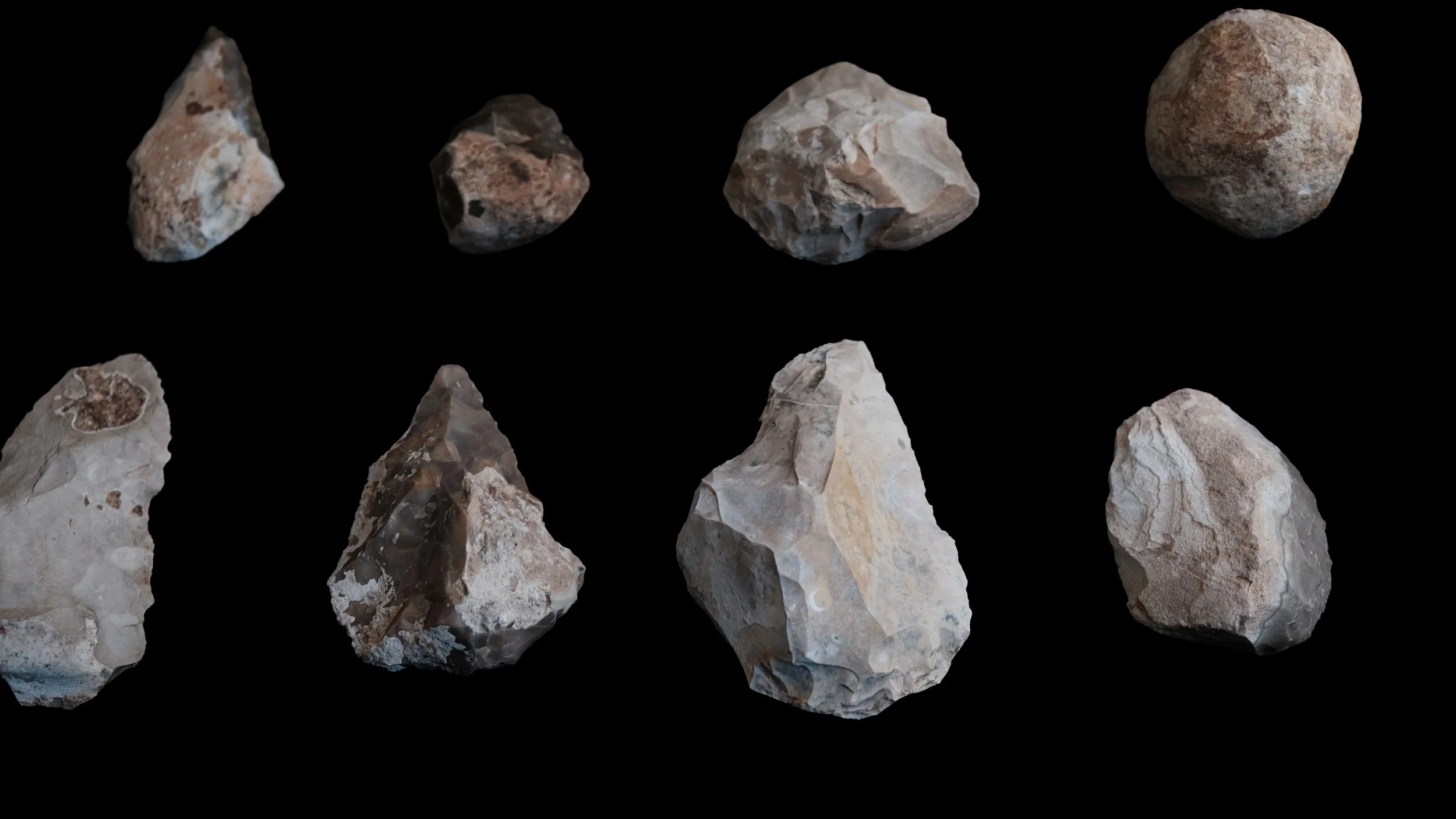
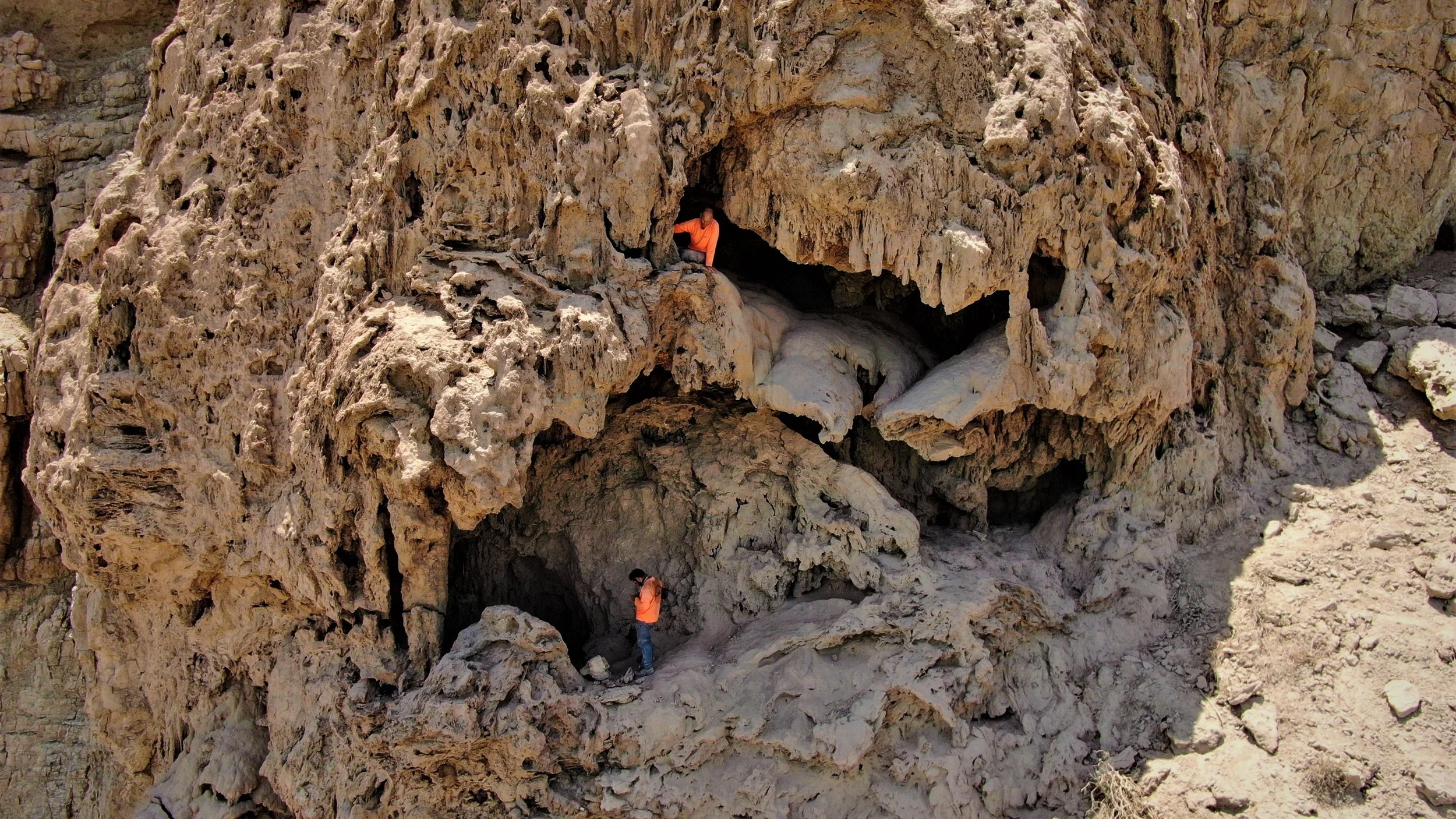
Prehistoric handaxes discovered in the ancient cave. Photo credit: Emil Aladjem, Israel Antiquities Authority

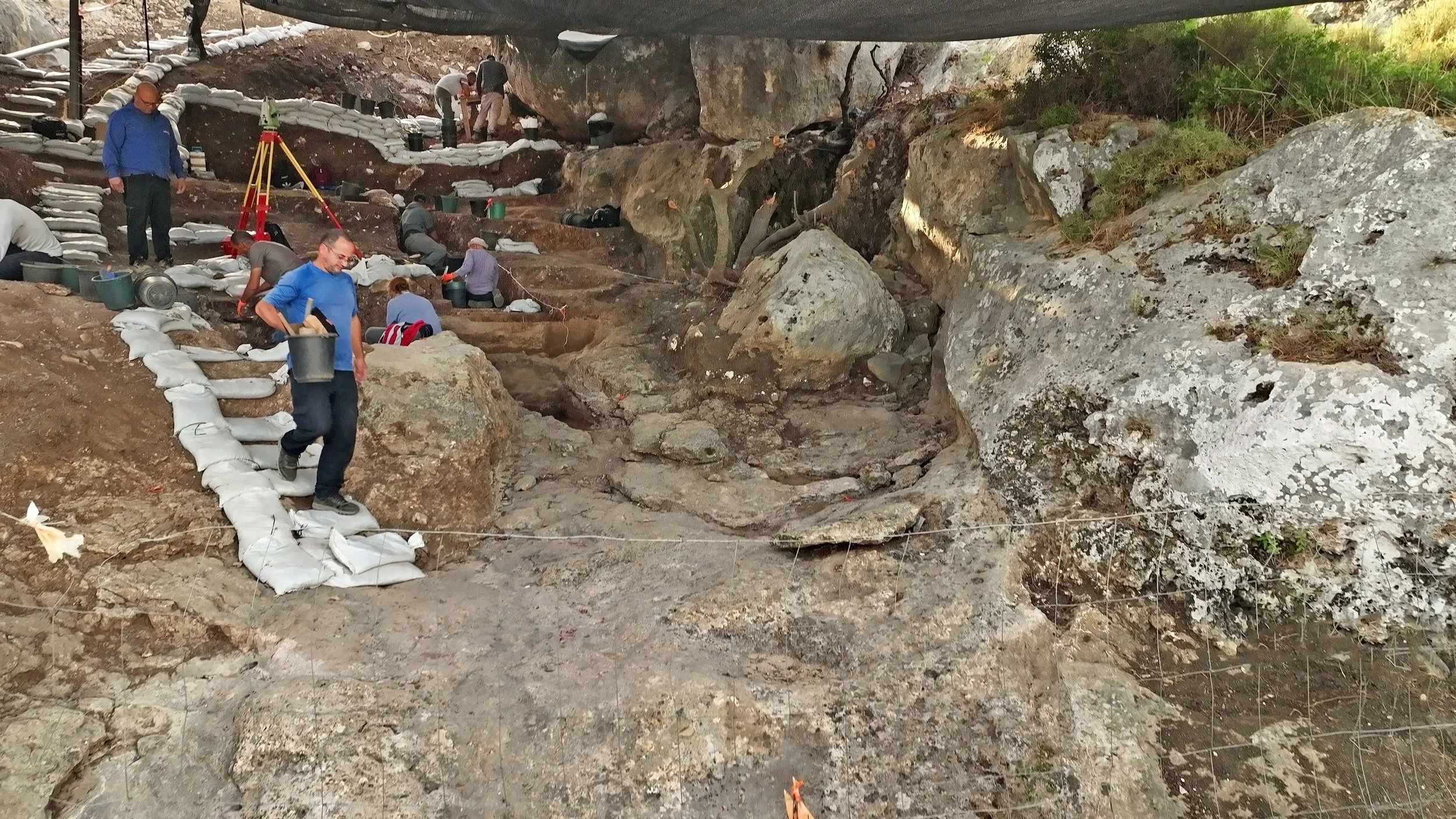
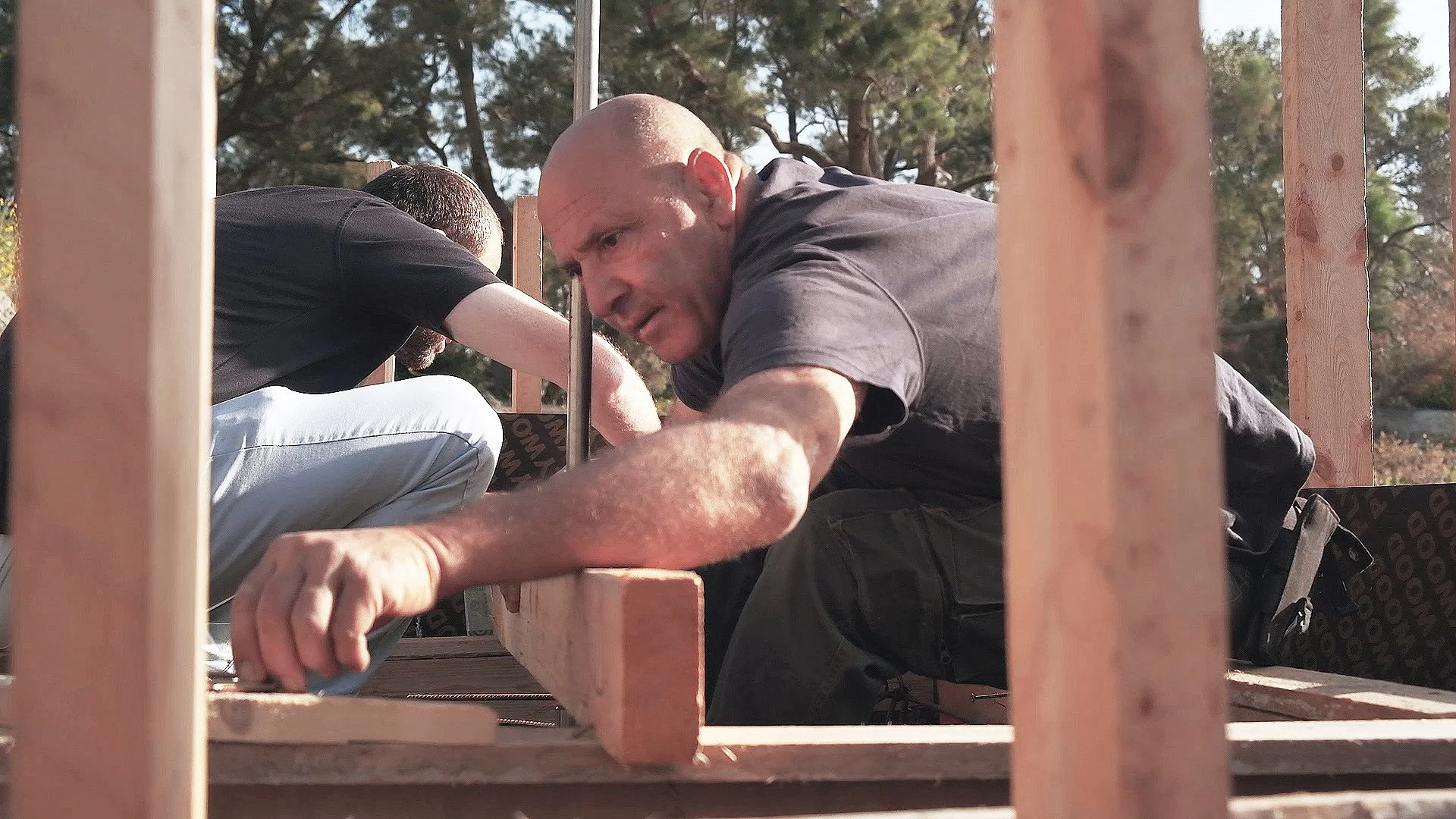
A prehistoric cave dating back between 400,000 and 250,000 years is currently being uncovered on the outskirts of the town of Fureidis, south of Haifa, near the Zikhron Ya’akov interchange. The excavation of the cave—a time capsule that remained sealed for hundreds of thousands of years since the time of the Acheulo-Yabrudian culture - is funded by Ayalon Highways Company and directed by Dr. Kobi Vardi and Amit Gabbay of the Israel Antiquities Authority, in cooperation with Prof. Ron Shimelmitz of the Zinman Institute of Archaeology and the School of Archaeology and Maritime Cultures at the University of Haifa.

“We have been fortunate to excavate a unique site of global importance that has been protected from the ravages of time thanks to the exceptional conditions that existed here,” says Prof. Ron Shimelmitz of the University of Haifa. “This time capsule belongs to a unique period at the end of the Lower Paleolithic era, just before Neanderthals and modern humans became dominant and spread across many regions. Only a handful of sites from this important phase have been uncovered in Israel and the wider Levant, and most of them are inaccessible for research.”

Excavations conducted by the Israel Antiquities Authority and the University of Haifa in the ancient cave. Photo credit: Emil Aladjem, Israel Antiquities Authority
“The gradual changes that emerged during this period in human physiology, technology, and society foreshadowed the traits and complex behavioral patterns that developed later and characterize both Neanderthals and modern humans,” explains Prof. Shimelmitz. He adds: “To a degree, they can be seen as the seeds that led to the development of our complex culture. One of the central processes taking place during this period is the transition to living in larger groups and spending longer periods at the same sites. Caves from this period have yielded evidence of intensive use of fire and prolonged human activity, suggesting complex and rich camp life. These are findings that many researchers associate with the development of social cooperation and the transmission of knowledge, as part of the processes of human evolution.”

According to Dr. Kobi Vardi, head of the Prehistory Branch at the Israel Antiquities Authority, “It is very rare to find a site in such a state of preservation. Every prehistorian who visits the site is absolutely thrilled. The site, which is no less important than the well-known Nahal Me’arot site—and dates to the same period—will allow us to study in high resolution how humans lived at that time. The culture we are investigating here was characterized by a variety of advanced methods for producing flint tools, including small sharp handaxes, scrapers, and blades. The excavation is also uncovering animal bones, including fallow deer, gazelle, and ancient horses, alongside evidence of the presence of water, which may have made the site attractive for ancient hunter-gatherer groups.”

In light of the site’s importance, the Israel Antiquities Authority and the University of Haifa are advancing a large-scale research program that seeks to reconstruct how humans lived, adapted to their environment, and developed new lifestyles and technologies over the course of human evolution.


“We very much appreciate the enthusiasm shown by Ayalon Highways Company in enabling us to undertake the excavation. The hope is that after the research is completed, this site will be open and accessible to all: to the residents of Fureidis, students at the nearby school, and anyone interested in the prehistory of the region,” the researchers conclude.

Excavations conducted by the Israel Antiquities Authority and the University of Haifa in the ancient cave. Photo credit: Emil Aladjem, Israel Antiquities Authority


Banner image: Excavations conducted by the Israel Antiquities Authority and the University of Haifa in the ancient cave. Photo credit: Emil Aladjem, Israel Antiquities Authority
A mysterious and impressive ancient tunnel has been discovered in an archaeological excavation in Jerusalem, near Kibbutz Ramat Rachel

The surprising discovery was uncovered during archaeological excavations conducted by the Israel Antiquities Authority ahead of the construction of a new neighborhood promoted by the Israel Lands Authority, and is expected to be incorporated into an archaeological park.

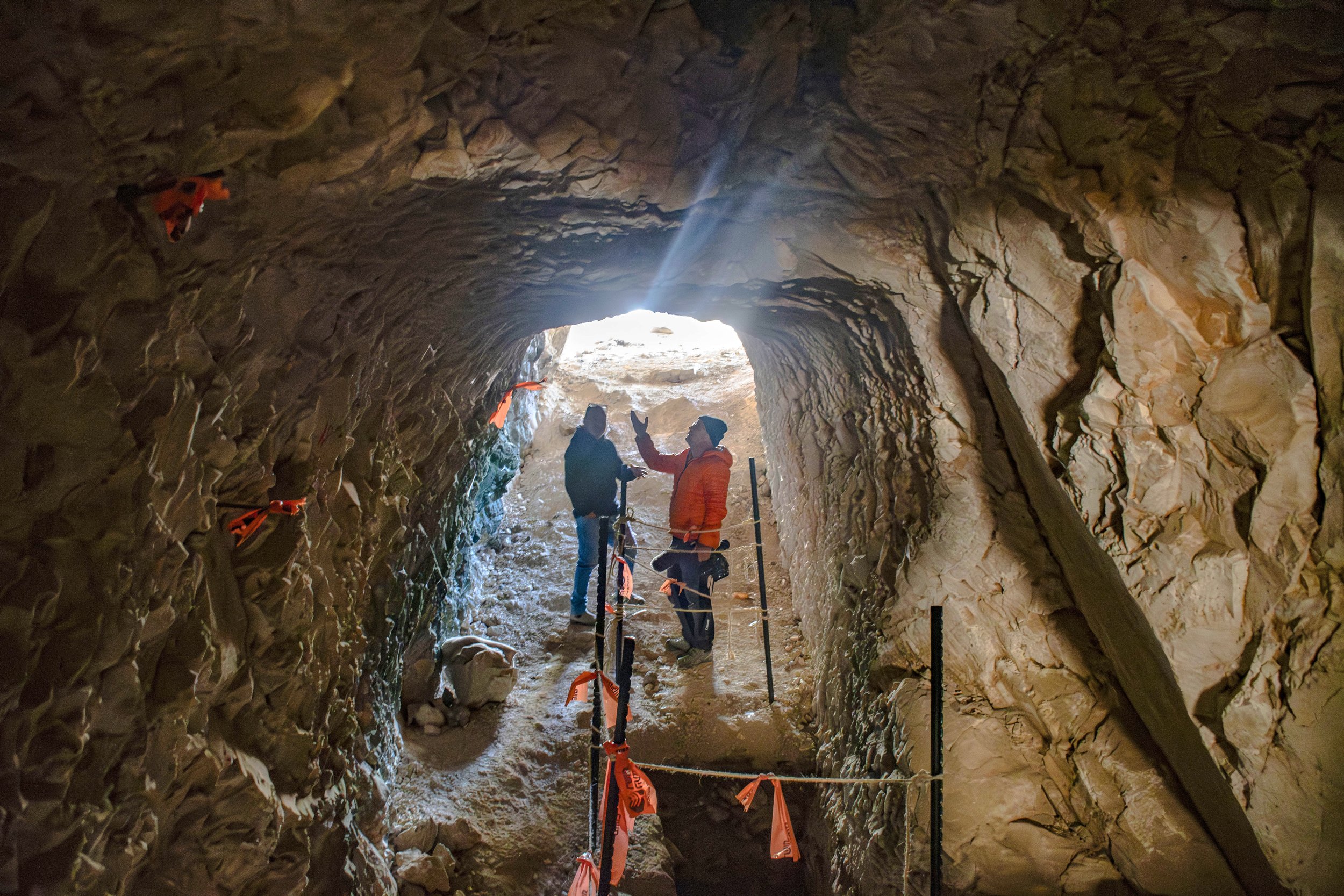
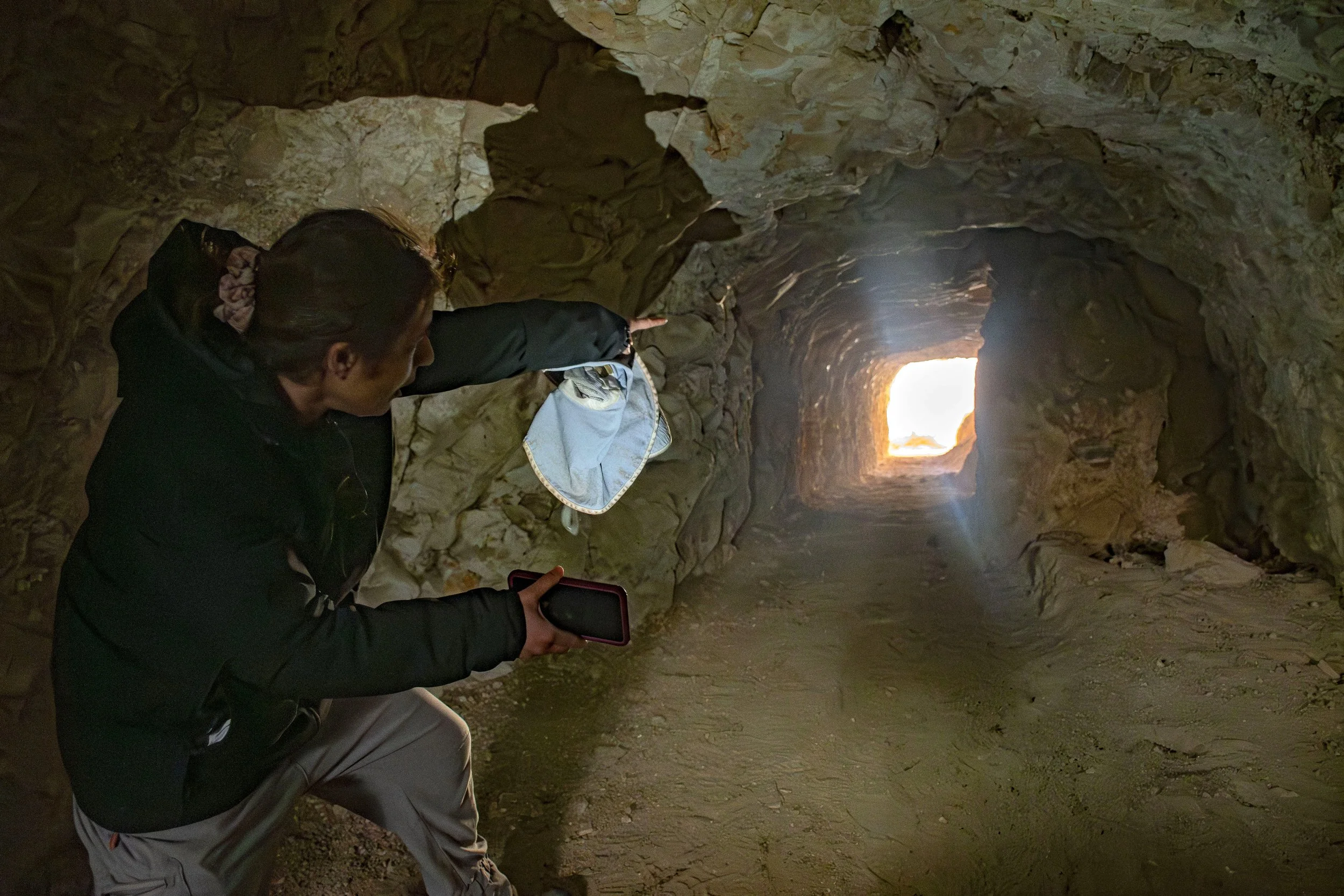
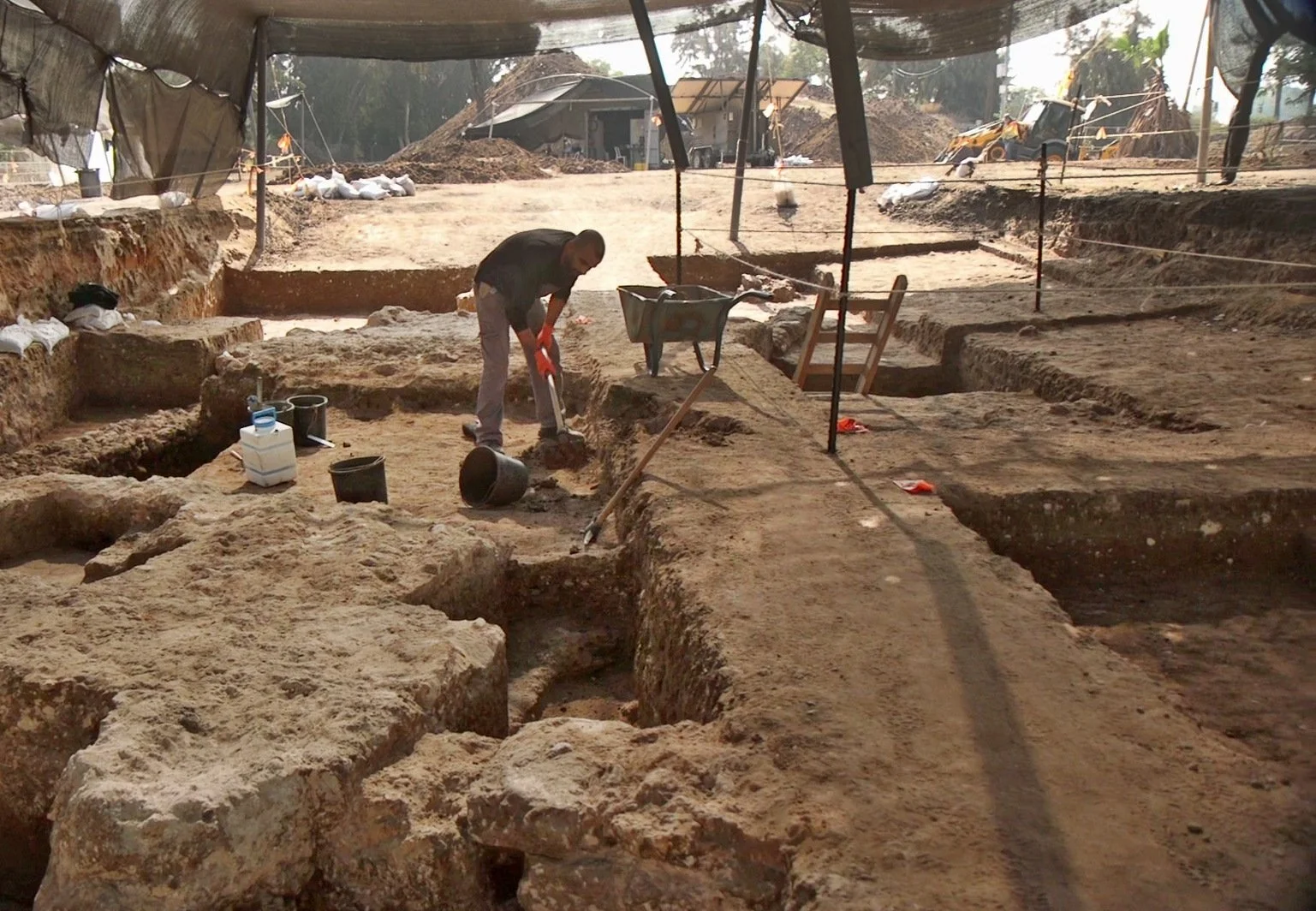
The entrance to the tunnel. Photo: Yoli Schwartz, Israel Antiquities Authority

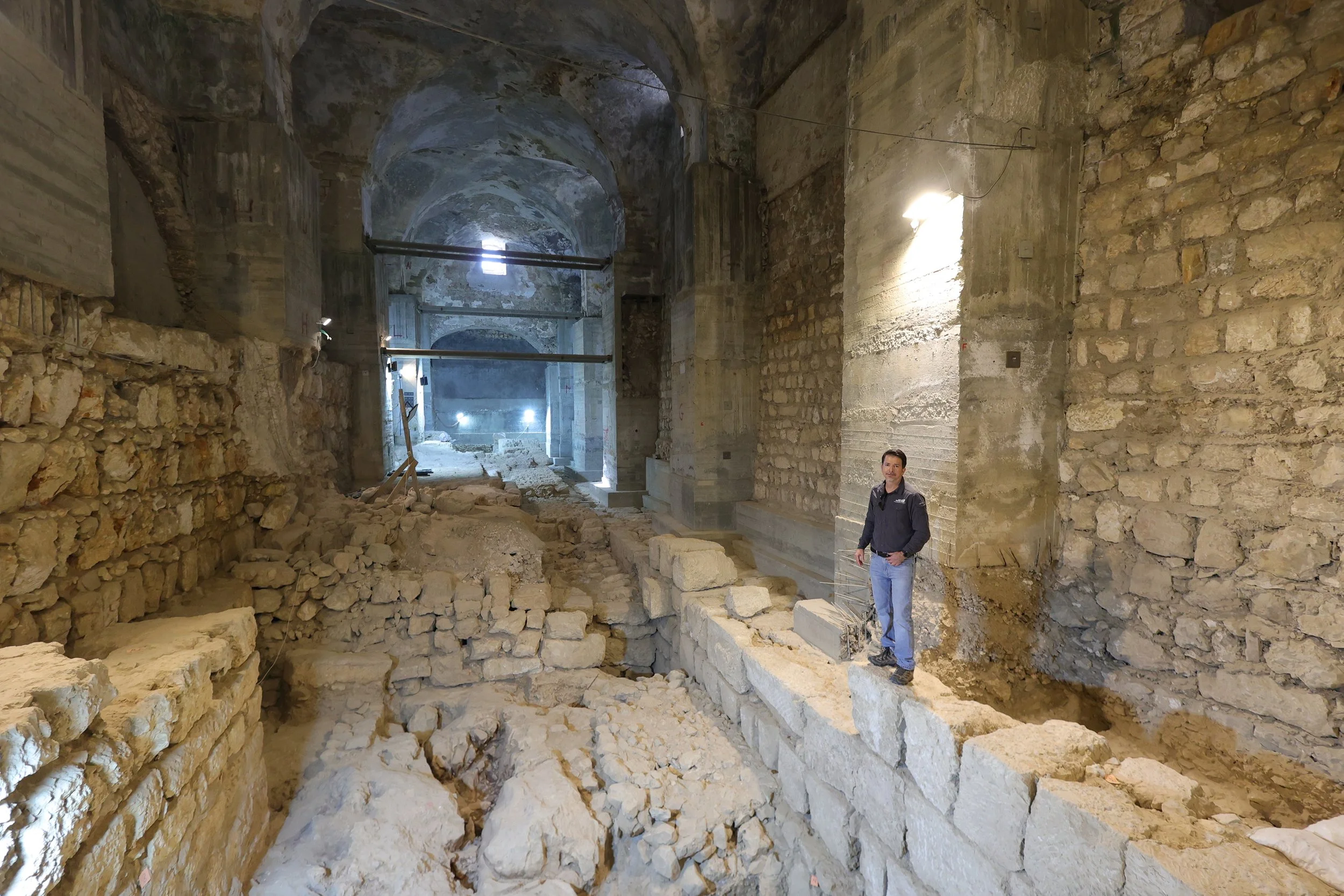
A mysterious and impressive ancient tunnel, hewn through the rock over a length of approximately 50 meters, was unexpectedly discovered near Kibbutz Ramat Rachel in Jerusalem. The extraordinary discovery was uncovered during archaeological excavations conducted by the Israel Antiquities Authority prior to the construction of a new neighborhood, funded and initiated by the Israel Lands Authority. The neighborhood plan, being advanced by the Israel Lands Authority north of Ramat Rachel, includes 488 housing units, thousands of square meters designated for employment and commercial use, over an area of approximately 58 dunams, as well as an elementary school and kindergartens.

“We were excavating in relatively rocky and exposed terrain when suddenly we discovered a natural karstic cavity,” said Dr. Sivan Mizrahi and Zinovi Matskevich, excavation directors on behalf of the Israel Antiquities Authority. “To our amazement, as the excavation progressed, this cavity developed into a long tunnel. Parts of it are still collapsed, so the tunnel has not yet revealed all of its secrets.”

The entrance to the ancient complex from the surface was through a staircase descending to a hewn opening that led into the tunnel. The tunnel itself was discovered filled with layers of soil that had accumulated over hundreds, perhaps even thousands, of years.

Excavation at several points inside the tunnel showed that it reaches a height of up to 5 meters and a width of approximately 3 meters. “The quarrying was executed meticulously. It is clear that whoever carved this tunnel invested tremendous effort, careful planning, and possessed the capabilities and resources necessary to achieve this goal.”

Yet the purpose of the tunnel remains unclear.


At first, researchers proposed that this was an ancient water installation intended to reach a spring source. This assumption, however, was ruled out, first because the tunnel walls are not plastered and, second, following consultation with a geologist, because no underground water horizons are known in this area, and the tunnel contains no indication of water accumulation.

The possibility that this was some kind of underground agricultural or industrial installation was then examined, but the scale of the work and the absence of comparable sites in the vicinity made this explanation unlikely.

The ancient tunnel uncovered in Jerusalem. Photo: Yoli Schwartz, Israel Antiquities Authority
The researchers’ current assessment is therefore that the tunnel was intended to reach a chalk layer suitable for quarrying building stones or producing lime. Possible evidence supporting this interpretation includes a shaft carved into the tunnel’s ceiling, which may have been used for ventilation, as well as quarrying debris discovered on the tunnel floor - although this interpretation, too, remains uncertain.

Alternatively, the findings may indicate that the quarrying and construction of the tunnel were never completed, and therefore its intended purpose and nature remain unknown.

According to Dr. Mizrahi and Matskevich, “The date of the tunnel is also a mystery to us, since not even the smallest find was uncovered that could indicate when it was created. At the same time, the tunnel lies only a few hundred meters, as the crow flies, from two significant ancient sites - a public building from the Iron Age (First Temple period) in the Arnona neighborhood, and Tel Ramat Rachel, where settlement remains dating from the Iron Age through the Islamic period have been documented.”

Shikma Sig, Jerusalem Region Planner at the Israel Lands Authority, said: “The Israel Lands Authority promoted the plan north of Ramat Rachel, which includes a residential quarter alongside a unique archaeological park that will be established for the benefit of residents. The neighborhood offers a rare combination of modern urban development and preservation of historical heritage, providing the future community with a green open space that makes the treasures of history accessible just beneath their homes. The Israel Lands Authority is proud to advance sustainable urban development for the benefit of Jerusalem residents and the citizens of Israel as a whole.”

Dr. Amit Re’em, Jerusalem District Archaeologist at the Israel Antiquities Authority, added: “We are celebrating Jerusalem Day this week. This discovery joins many others being uncovered every day, hour by hour, throughout the city. The archaeologists and researchers of the Israel Antiquities Authority are constantly at work, because this city never ceases to surprise. Usually we have explanations for the discoveries we uncover, but sometimes, as in this case, we stand astonished and amazed.”
According to Israeli Minister of Heritage Rabbi Amichai Eliyahu, “During Jerusalem Day week, this special discovery reminds us of the deep and ancient connection of the Jewish people to Jerusalem. Beneath the city’s soil, extraordinary enterprises of life, creativity and construction are revealed time and again, testifying to generations of people who lived and worked here and left their mark. Jerusalem is not only the present-day capital of the State of Israel - it is also the heart of the historical story of the Jewish people, which continues to be uncovered before our eyes.”

This impressive discovery is expected to be incorporated into an archaeological park for the benefit of the public and the future residents of the neighborhood being planned by the Israel Lands Authority.

Banner image: Yoli Schwartz, Israel Antiquities Authority
Following a joint investigation: Rare ancient coins were returned from the USA to the State of Israel


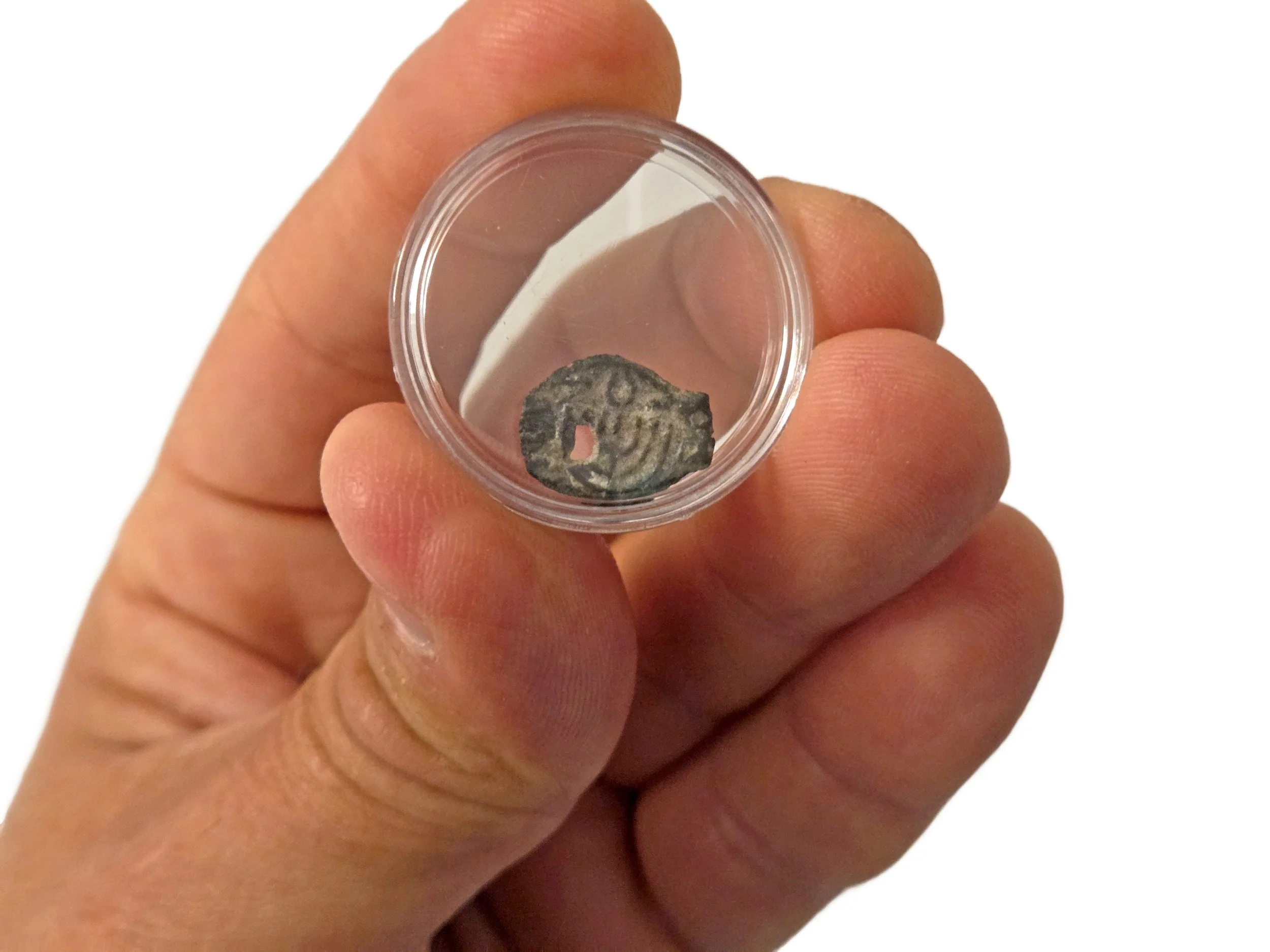
A joint Antiquities theft investigation by the Israel Antiquities Authority and United States authorities led to the return of two rare and ancient coins to the State of Israel. One depicts the seven-branched menorah that stood in the Second Temple in Jerusalem, and another is only the second known of its kind in the world.
An ancient and rare coin depicting the seven-branched menorah that stood in the Temple in Jerusalem, and another rare coin from Ashkelon – the second of its kind known in the world, were returned to Israel this week (Monday) in an official ceremony in New York City. This follows a complex international operation by the Israel Antiquities Authority's Theft Prevention Unit in cooperation with the Antiquities Trafficking Unit at the Manhattan District Attorney’s Office and Homeland Security officials .

The coins were minted in Hasmonean ruled Jerusalem and in the ancient Mediterranean port city of Ascalon. They were taken from the soil by antiquities looters, and were allegedly smuggled out of the country. Recently the coins were put up for sale at auction houses in the United States to the highest bidder. Intelligence information passed on by inspectors of the Israel Antiquities Authority Theft Prevention Unit to the US authorities led to the opening of an investigation against both the auction houses and the sellers. A rapid joint investigation helped to provide evidence against the suspects, and ultimately the coins were confiscated to be returned to Israel.

One coin is a small bronze prutah, minted during the reign of the last Hasmonean king, Mattathias Antigonus, who ruled in Jerusalem from 40 to 37 BCE. On one side of the coin appears an image of a seven-branched menorah –one of the earliest artistic representations of the menorah. This is the only Jewish coin with a depiction of the seven-branched candelabrum which stood in the Temple in Jerusalem. The other side of the coin bears a depiction of the showbread table, another sacred object used in the temple. Antigonus' choice as king and high priest to display distinctly Jewish symbols on his coin probably stemmed from his desire to gain the support of his kingdom's inhabitants as he struggled against his rival Herod, who enjoyed Roman political and military support. Due to its rarity, and as the last coin of Hasmonean independence, this coin type was defined as an item of national importance, and specimens of this coin are prohibited from being exported outside of Israel.

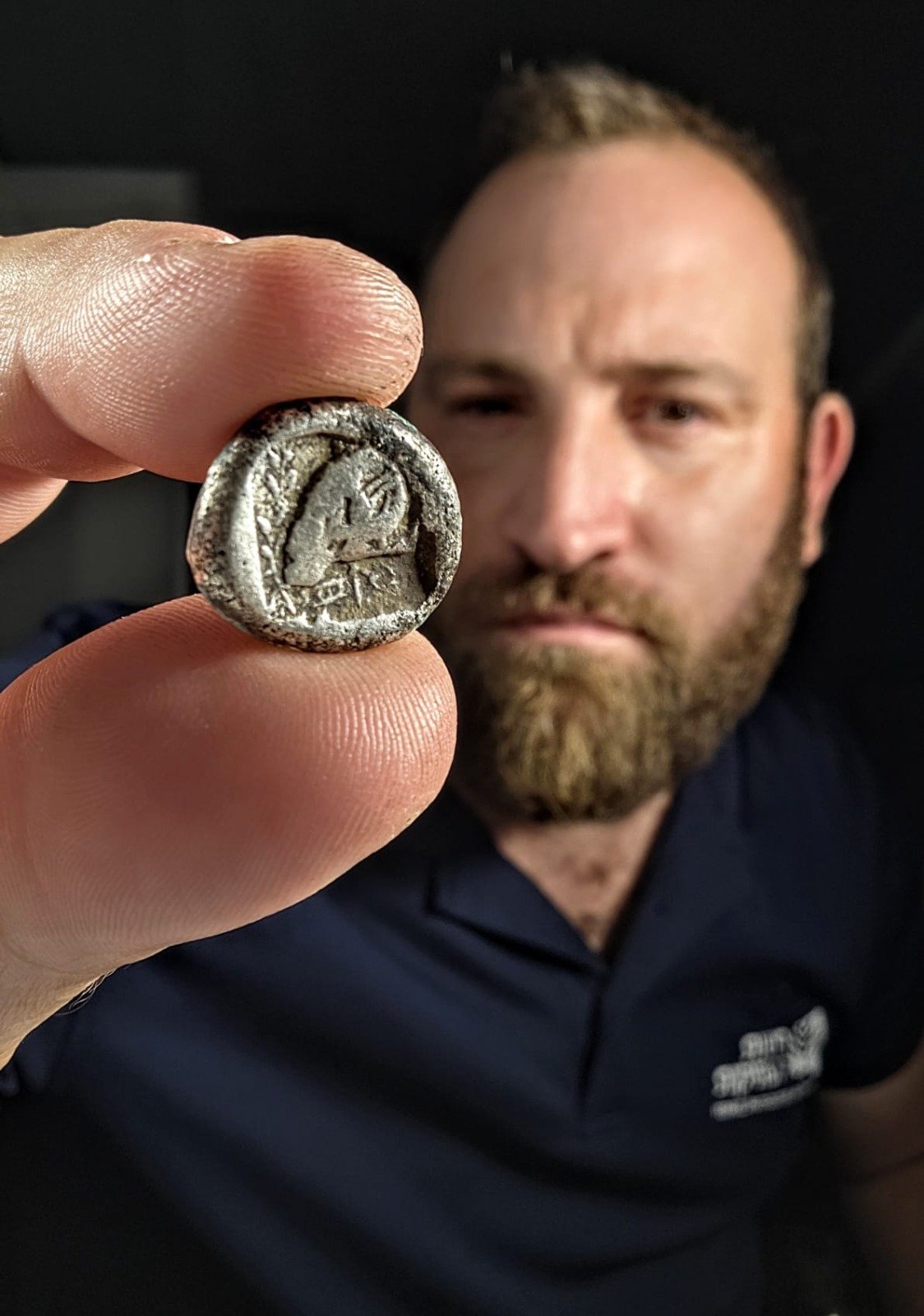
The second coin which returned to Israel yesterday is a silver tetradrachm from the Persian period, minted in Ascalon, over 2500 years ago. This is one of the rarest of ancient coins minted in the Land of Israel, and so far, only one other exemplar is known to exist, now in the Israel Museum coin collection. Its design is inspired by the Athenian tetradrachm – the standard currency throughout the Eastern Mediterranean during this period. One side depicts the helmeted goddess Athena, and on the other side an owl facing, spreading its wings. Above the owl in the upper right corner appear the letters “Aleph” and “Nun” in Phoenician script – an abbreviation for the name of its mint  'Ascalon', the first and last letters of the city’s name. This extremely rare coin is also prohibited from being exported from the State of Israel due to its rarity.

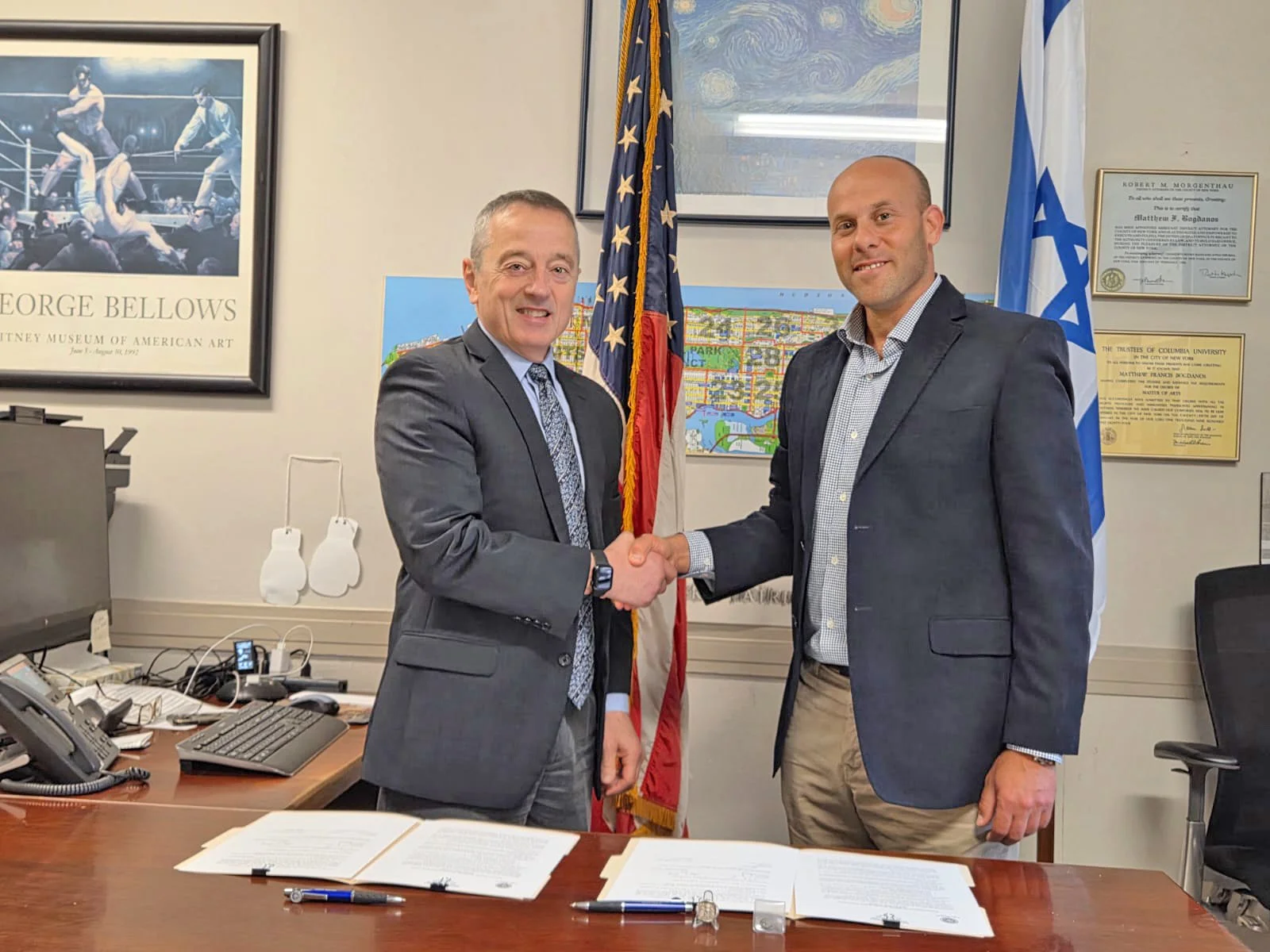
Photo of Dr. Eitan Klein and Colonel Matthew Bogdanos in the event that was held in NY City- Antiquities Trafficking Unit

At the official state ceremony returning the coins, that was held at the Manhattan District Attorney's Office, Colonel Matthew Bogdanos, Chief of the Antiquities Trafficking Unit, said, “These extraordinary coins represent an important piece of history that is finally coming home. Furthermore, they represent an extraordinary partnership between the Antiquities Trafficking Unit in New York and the Israel Antiquities Authority. This is a partnership that should serve as a model for the return of looted cultural heritage around the world.”

According to Ilan Hadad, Inspector in charge of antiquities commerce in the Israel Antiquities Authority's Theft Prevention Unit: “The illegal trade in antiquities is a distressing international phenomenon, which constitutes an economic engine promoting antiquities looting and untold damage to cultural heritage assets. For the sake of money, thousands of years old antiquities from the State of Israel are looted, smuggled and sold abroad. Inspectors of the Israel Antiquities Authority's Theft Prevention Unit are fighting this phenomenon in order to preserve and protect the historical heritage of the State of Israel.”

Dr. Eitan Klein, Deputy Director of the Antiquities Theft Prevention Unit, who represented the country at the repatriation ceremony of these ancient objects, declared: “The illegal trade in looted antiquities is a widespread international phenomenon, which requires cooperation between countries and enforcement agencies around the world. The Israel Antiquities Authority is at the forefront of the struggle to protect and preserve the unique cultural heritage assets of the State of Israel and conducts extensive international cooperation in this field around the world. The cooperation with our counterparts in the United States is exceptional in its scope and quality, and made this success possible, along with many other successes in the fight against the illegal antiquities trade.”
 

According to Israel’s Minister of Heritage, Rabbi Amihai Eliyahu, “Israel and the United States are working shoulder-to-shoulder not only in the security arena, but also to bring home our historical story. The rare coin with the seven-branched menorah is a clear symbol of Jewish life in the Land of Israel thousands of years ago. The theft of antiquities is an attempt to erase this history of ours and cut us off from our roots. They will not succeed. We will continue to act resolutely together with partners around the world to stop this phenomenon and to protect our heritage.”

Photo credits: Dr. Eitan Klein, Israel Antiquities Authority


Jump into the past with one click: The Israel Antiquities Authority unveils the Land of Israel’s National Archaeological Database

One of the largest digital archaeological databases in the world, with approximately 4 million records –with almost one million objects discovered in excavations, over one million images, 15,000 3-D models of finds and sites, and more – all now easily accessible to researchers and to the public, in Israel and the world over


The Israel Antiquities Authority launches the Israel National Archaeological Database -  A groundbreaking digital platform, one of the largest of its kind in the world, centralizes all the archaeological information collected and researched in Israel. The database currently includes 3,910,005 records, alongside 964,393 objects, 1,223,552 images, 15,164 3-D models, and much more.

Gamla National Park. Model by Alexander Wiegmann. From the National Archaeology Database of the Land of Israel, Israel Antiquities Authority
Using the new database, researchers, and the general public from Israel and abroad can browse publications, photos, 3-D scans, excavation reports, archive documents and more – in a smart search by site, period, type of find and other categories.

One of the outstanding capabilities of the system is an interactive geographic search, which allows you to plot an area of ​​interest on a map, and to immediately receive all the relevant archaeological information – from findings to excavation documents, images, models and professional publications.

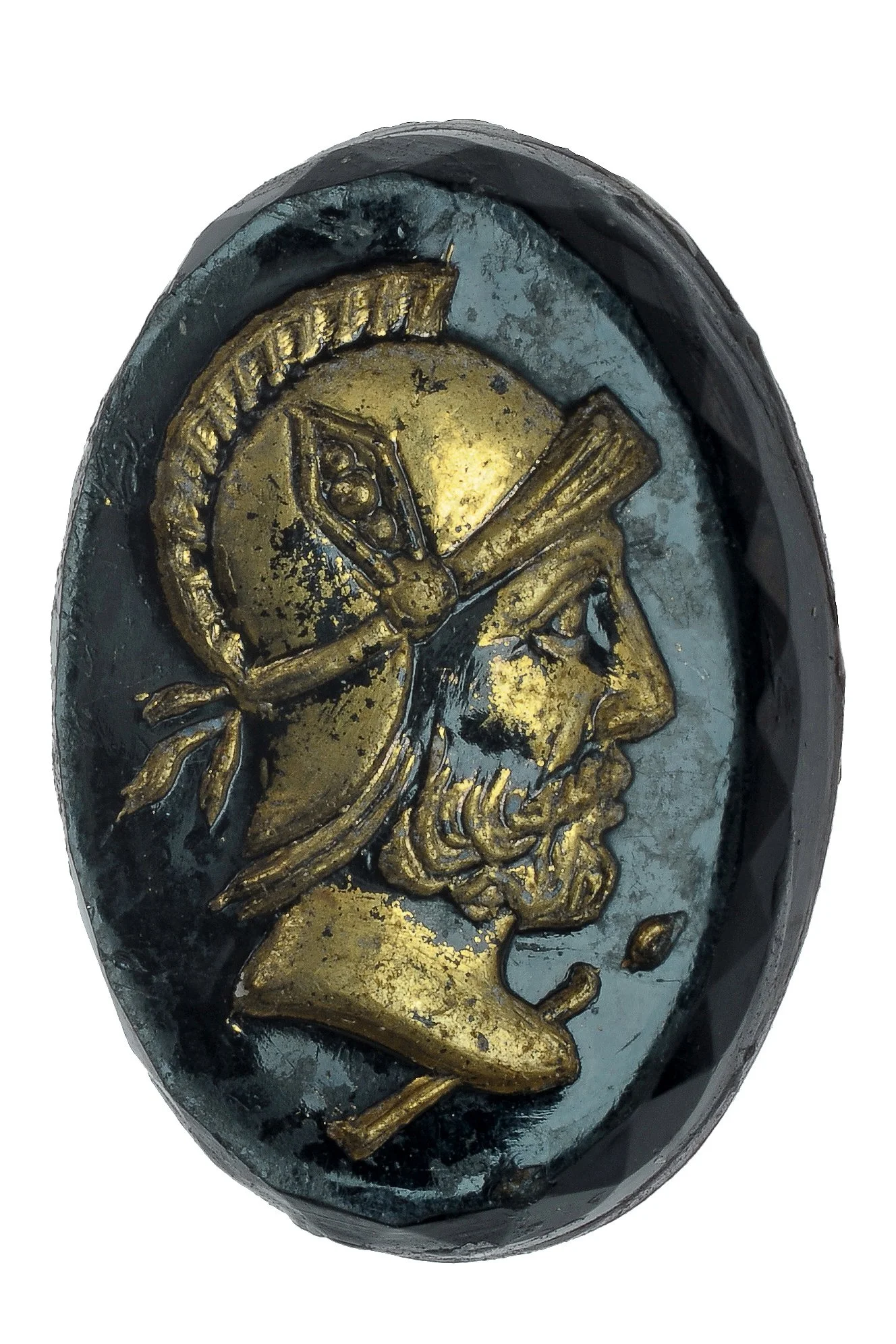
An Engraved gem from Hanita (Roman period) – Can be found in the National Archaeology Database. Photo: Clara Amit, Israel Antiquities Authority

“In a country with a rich heritage like Israel, a huge collection of archaeological information from all periods has been collected over the years,” explains Alby Malka, Head of the Technologies Division at the Israel Antiquities Authority. “By Israeli law, every archaeological find that is uncovered must be reported, documented and deposited in the National Archives. As a result, data constantly gathers under the aegis of the Israel Antiquities Authority on many archaeological digs, as well as on hundreds of thousands of ancient items – from scrolls and coins to pottery, jewelry and archaic architectural elements. A national archaeological database, which gathers and makes all this knowledge accessible both to the lay public and to researchers, is a tool of paramount importance for scientific research, for preserving the country’s heritage, and for deepening public knowledge, with tools accessible and inviting to the younger generation. This database represents a real revolution. Instead of spending months physically traveling and searching in print archives and reports, any researcher anywhere in the world – and really any person, there are no restrictions – can type in a single word or mark a point on the map, and receive all the available collected information in seconds, directly into their hands. This is truly a monumental and transformative leap forward that at once puts Israel at the forefront of global archaeological research.”

Dr. Débora Sandhaus, Chief Scientist of the Israel Antiquities Authority, added, “The Israel National Archive for Archaeology is not only a treasure for Israel, but is a global asset. It gives the international scientific community unique access from any computer in the world to vast knowledge about the history of the Levant, and enables a large-scale comparative study, which was never even possible until now.”

Dr. Débora Sandhaus, Chief Scientist of the Israel Antiquities Authority. Photograph by Yoli Schwartz, Israel Antiquities Authority

According to Eli Escusido, Director of the Israel Antiquities Authority, “In an age where there is a growing need for access to reliable and well-grounded knowledge, the Israel National Archaeological Database is an expression of the Israel Antiquities Authority's commitment to transparency and professionalism. This database reflects the great wealth of archaeological research in Israel across all periods and all cultures, since this country has been a crossroads throughout human history, and we preserve and report all of it – we are the guardians of the footprint of every creed, culture and religion that ever walked though this land – that is our moral and legal mandate. The online National Archive embodies a universal, fundamental template that makes our human heritage accessible to the general public and researchers worldwide”.

Banner image: The ancient synagogue in Baram National Park. Over 15,000 models have been uploaded to the National Archaeology Database. Model by David Zell, Israel Antiquities Authority