
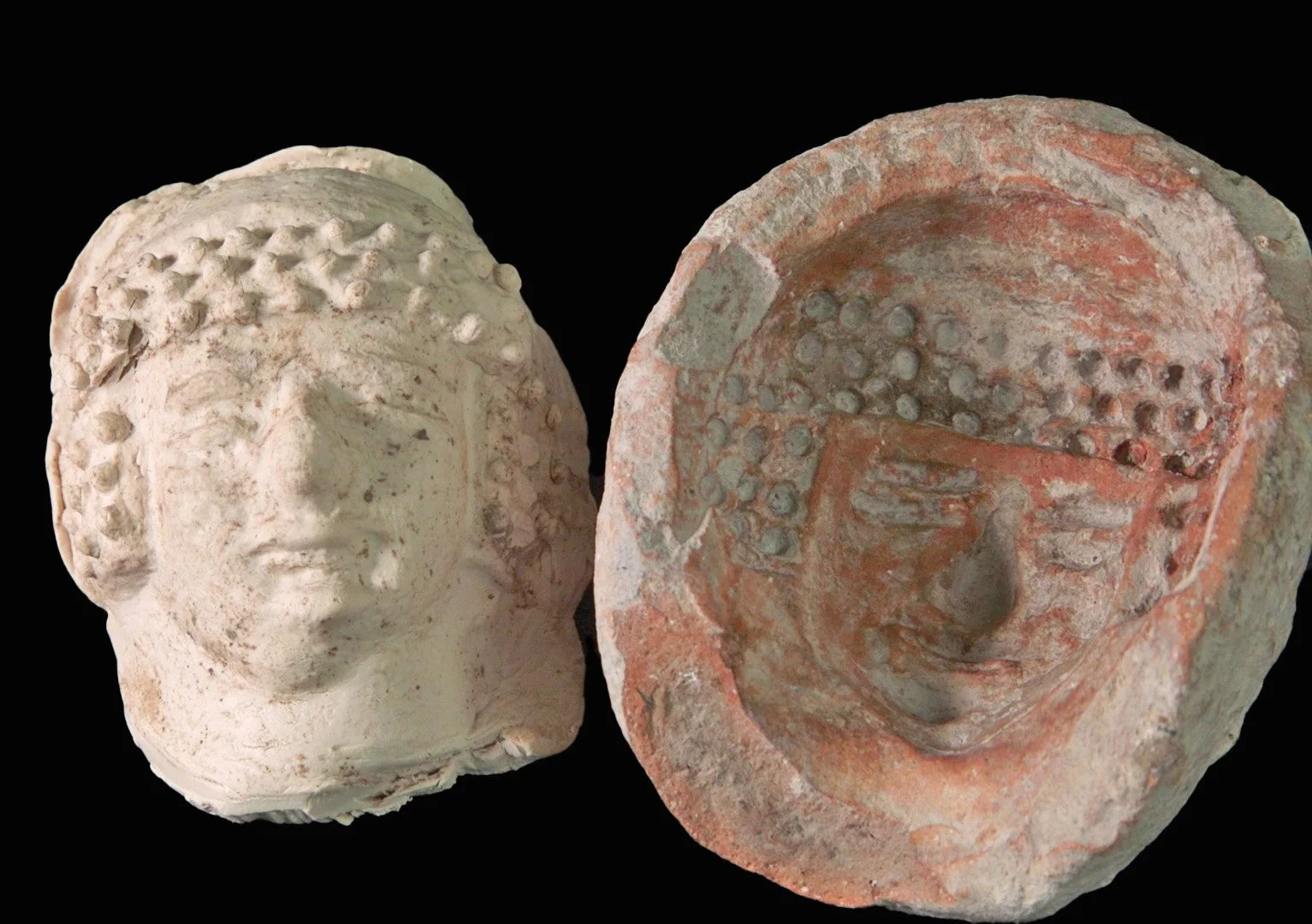
"Although many figurines from this period have been uncovered in Jerusalem, this is the first time that a mold used to manufacture them has ever been found in the city," say researchers from the Israel Antiquities Authority.

The rare mold used to produce the face of the female figurine, alongside one of the female figurine heads previously discovered in Jerusalem. Credit: Emil Aladjem, Israel Antiquities Authority
A rare mold used for casting the face of a female figurine, dating to the First Temple period, has been discovered during archaeological excavations recently conducted by the Israel Antiquities Authority at the Kishle, within the grounds of the Tower of David Jerusalem Museum.
The excavations are part of the construction of the new Schulich Wing for Archaeology, Art and Innovation at the Tower of David Jerusalem Museum. The new wing will complement the Museum’s permanent galleries by showcasing the site’s unique heritage through archaeology, contemporary art, and innovation, revealing the extraordinary remains of Jerusalem’s past that lie beneath visitors’ feet. The Schulich Foundation, one of Canada’s largest foundations, proudly supports education, healthcare, arts and culture.
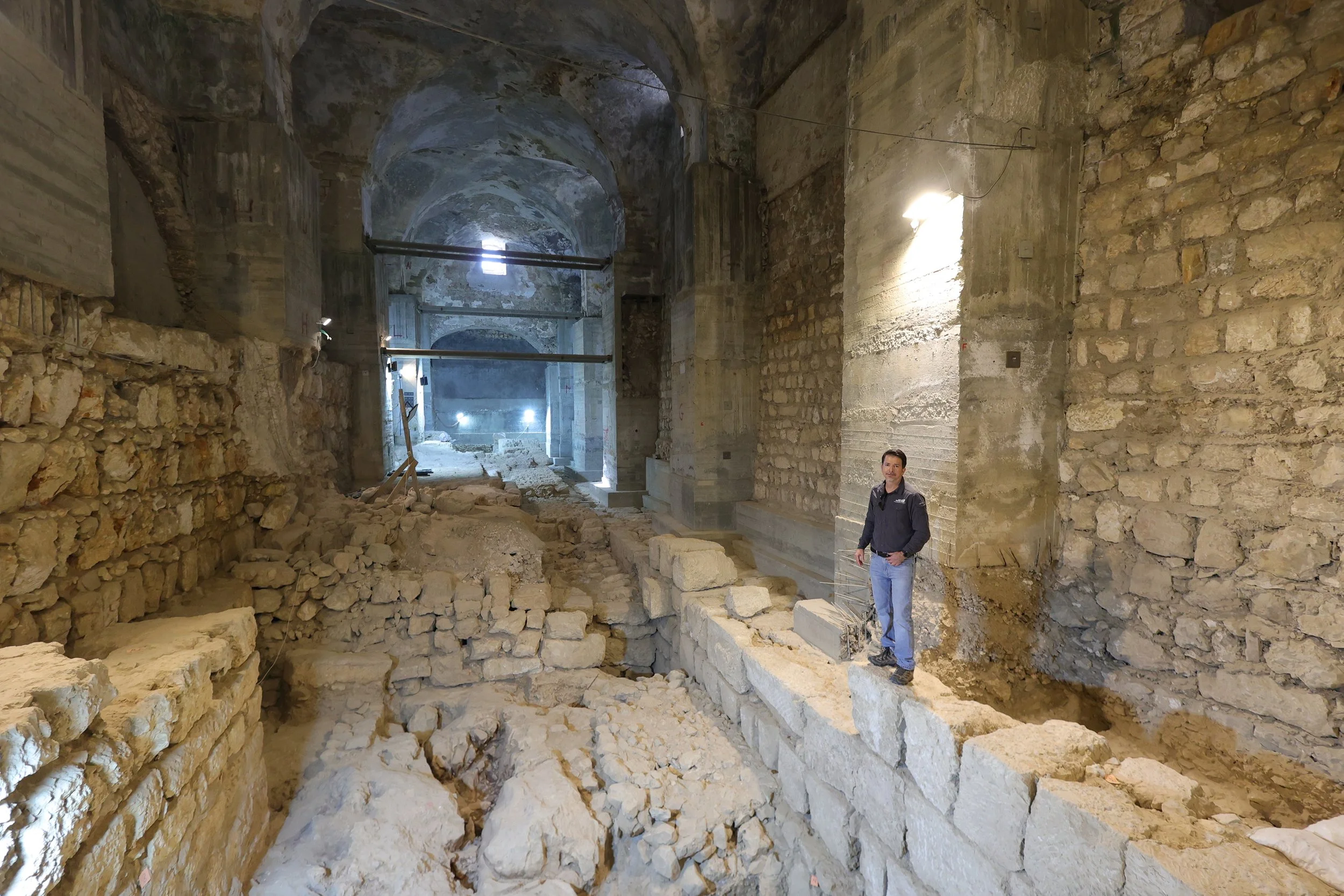
Excavation area in the Kishle Compound. Credit: Gabriel Volcovich, Tower of David Jerusalem Museum
"The mold was discovered while sifting soil removed from fills and accumulations dating to the First Temple period," explain Dr. Amit Re'em and Dr. Ayala Zilberstein, excavation directors on behalf of the Israel Antiquities Authority. "The Kishle excavation, which has been ongoing for several years, continues to surprise us time and again. It is one of the most significant archaeological excavations conducted in Jerusalem in recent decades, presenting the city's history in a clear and continuous sequence—from the days of the Kings of Judah, through the many periods that shaped Jerusalem, and up to the British Mandate."
Following its discovery, the mold was transferred to Tamar Gonen, a ceramics conservation and restoration specialist at the Israel Antiquities Authority, who carefully cleaned away every grain of soil. The conservation work revealed the mold's delicate details and the finely crafted facial features impressed within it.
The mold was then handed to Sviatoslav Klindukhov, a conservation and restoration specialist, who created a cast from it using an appropriate material. The impressive result is a full reconstruction of the face of a female figurine, displaying clearly defined features and an elaborate curly hairstyle.
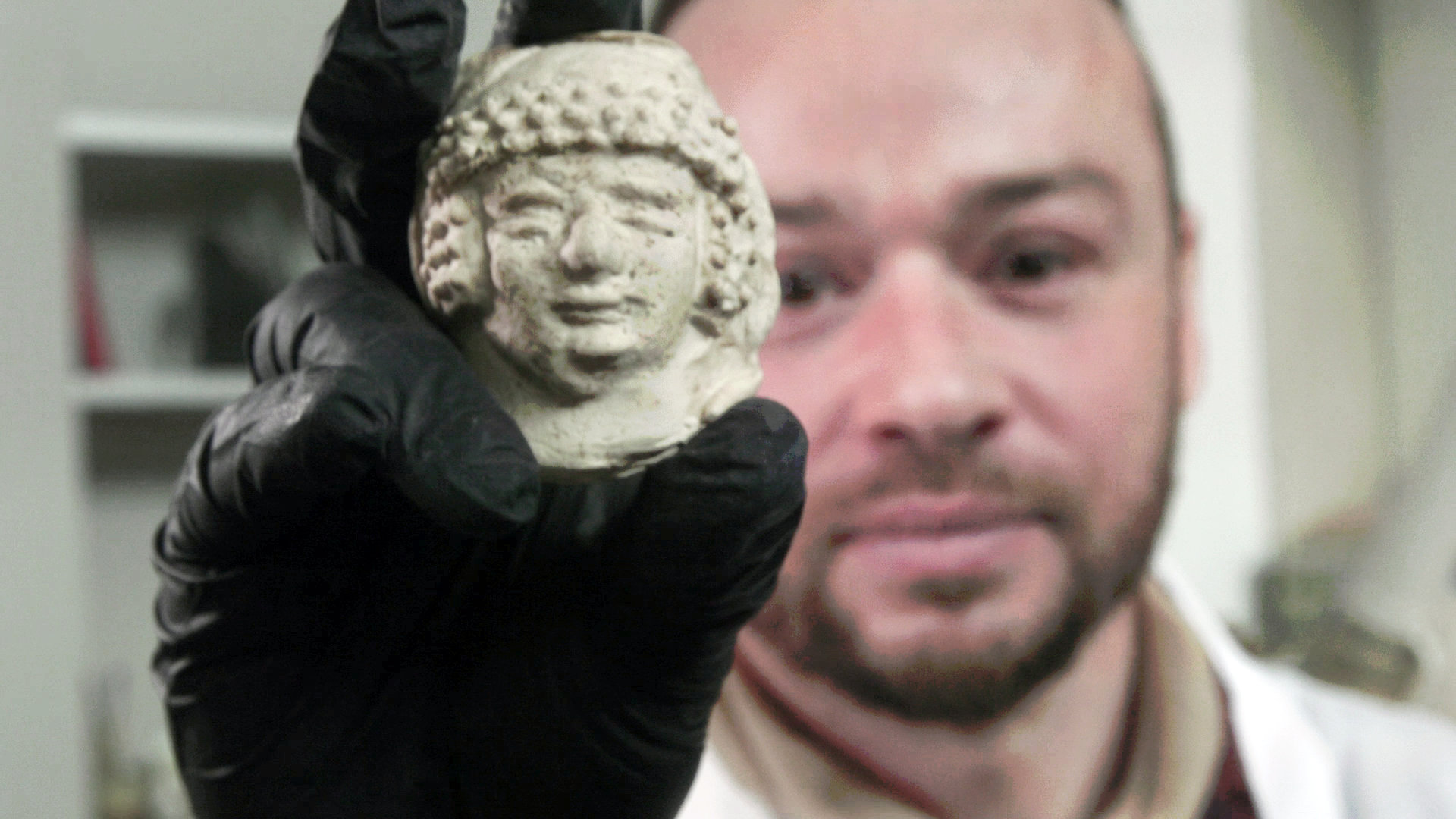
Israel Antiquities Authority conservator Sviatoslav Klindukhov with the reconstructed figurine he produced from the rare mold. Credit: Emil Aladjem, Israel Antiquities Authority
"Clay figurines from the First Temple period are known from almost every archaeological excavation conducted in Jerusalem and throughout Judah," says Dr. Amit Re'em. "Until now, however, no production molds for these figurines had ever been discovered in Jerusalem. This raised the question of whether they were manufactured locally or imported from elsewhere. The discovery of this mold at the Kishle is therefore the first of its kind in Jerusalem, providing direct evidence that at least some of these figurines were produced within the city itself."
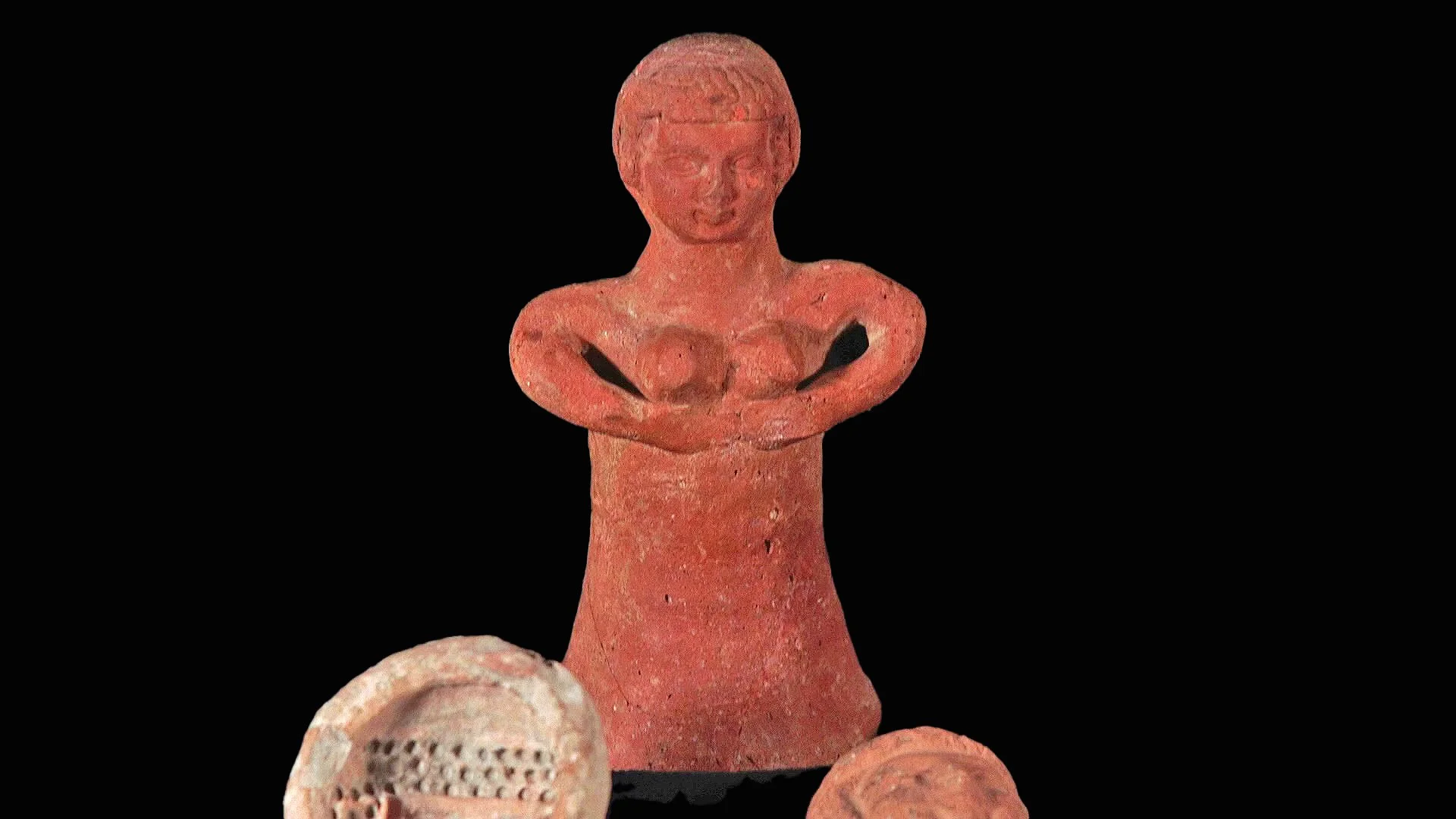
Female figurines generally measured between approximately 10 and 20 cm in height. In most cases, they were found broken at the neck, reflecting the manufacturing technique in which the body and the head were made separately by hand, while only the head was formed in a mold. Credit: Emil Aladjem, Israel Antiquities Authority
These figurines date to the late First Temple period, between the 8th and 6th centuries BCE. Made of clay, they generally stood between approximately 10 and 20 centimeters high. In most cases, they are found broken at the neck—a result of the manufacturing technique, in which the head and body were made separately by hand, while only the face was formed using a mold.
Archaeologists recognize three principal types of First Temple period figurines:
Female figurines, commonly known as Judean Pillar Figurines, typically depicting women with prominent hairstyles and their hands positioned beneath their breasts.
Horse-and-rider figurines.
Zoomorphic (animal) figurines, primarily representing horses, though other animals also appear.
The figurines were coated with a white slip, and surviving traces of pigment indicate that they were originally painted in yellow, red, and black.
According to Debbi Ben-Ami, Curator of the Iron Age at the Israel Antiquities Authority: "The meaning and function of these figurines are still not fully understood. The fact that they have been found in almost every household, as well as in streets and tombs, indicates that they were objects of everyday use. The identity and purpose of the Judean Pillar Figurines remain the subject of scholarly debate. They have previously been interpreted as representations of a fertility goddess—perhaps the goddess Asherah—and some have even suggested they were children's toys. However, they may instead have served as mediating or blessing figures, functioning as household amulets intended to bring blessing, protection, and good fortune. We hope that the newly discovered mold from Jerusalem will provide fresh insights and help answer some of the questions that continue to occupy researchers."
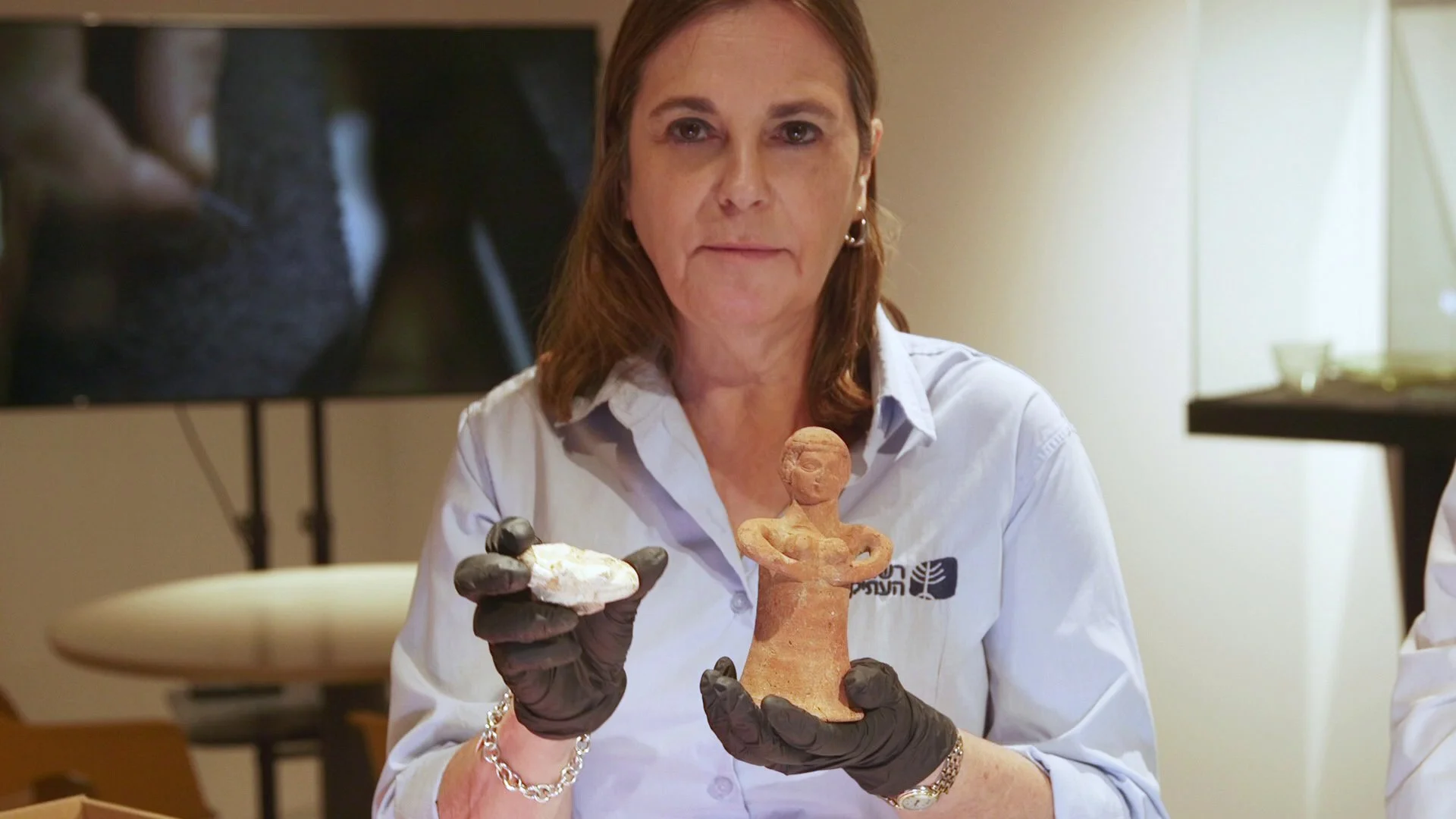
Debbie Ben-Ami, Israel Antiquities Authority senior archaeologist and researcher of the mold. Credit: Israel Antiquities Authority
Eilat Lieber, Director and Chief Curator of the Tower of David Jerusalem Museum: "The discovery of the first mold for producing figurines dating to the First Temple period has generated tremendous excitement among all of us. The Tower of David Jerusalem Museum is built on the idea that Jerusalem's past continues to shape its present. This summer, visitors will have the extraordinary opportunity to take part in real archaeological research by sifting soil from the Kishle excavations. Every fragment recovered helps illuminate another chapter in the story of Jerusalem, making participants true partners in preserving and revealing the city's remarkable heritage".
Israel's Minister of Heritage, Rabbi Amichai Eliyahu, said: "According to the Sages, the First Temple was destroyed because of three principal sins: idolatry, sexual immorality, and bloodshed. The discovery of a mold for producing figurines from the First Temple period in the heart of Jerusalem offers us a tangible glimpse into the world in which the prophets of Israel lived and into the spiritual and cultural realities they confronted. When such an artifact emerges from the soil of Jerusalem, history becomes real and immediate: this small piece of pottery tells the story of the beliefs, customs, and spiritual challenges that characterized the capital city in ancient times."
As part of the summer activities at the Tower of David Jerusalem Museum, families are invited to sift soil from the Kishle excavation in the hope of uncovering additional finds. The activity involves hands-on fieldwork, and closed-toe shoes are recommended. Please note that the activity is not accessible. For information and dates: https://www.tod.org.il/event/kishle-families/
Banner image: The mold used to produce the face of the female figurine, alongside the reconstruction produced from it. Credit: Emil Aladjem, Israel Antiquities Authority
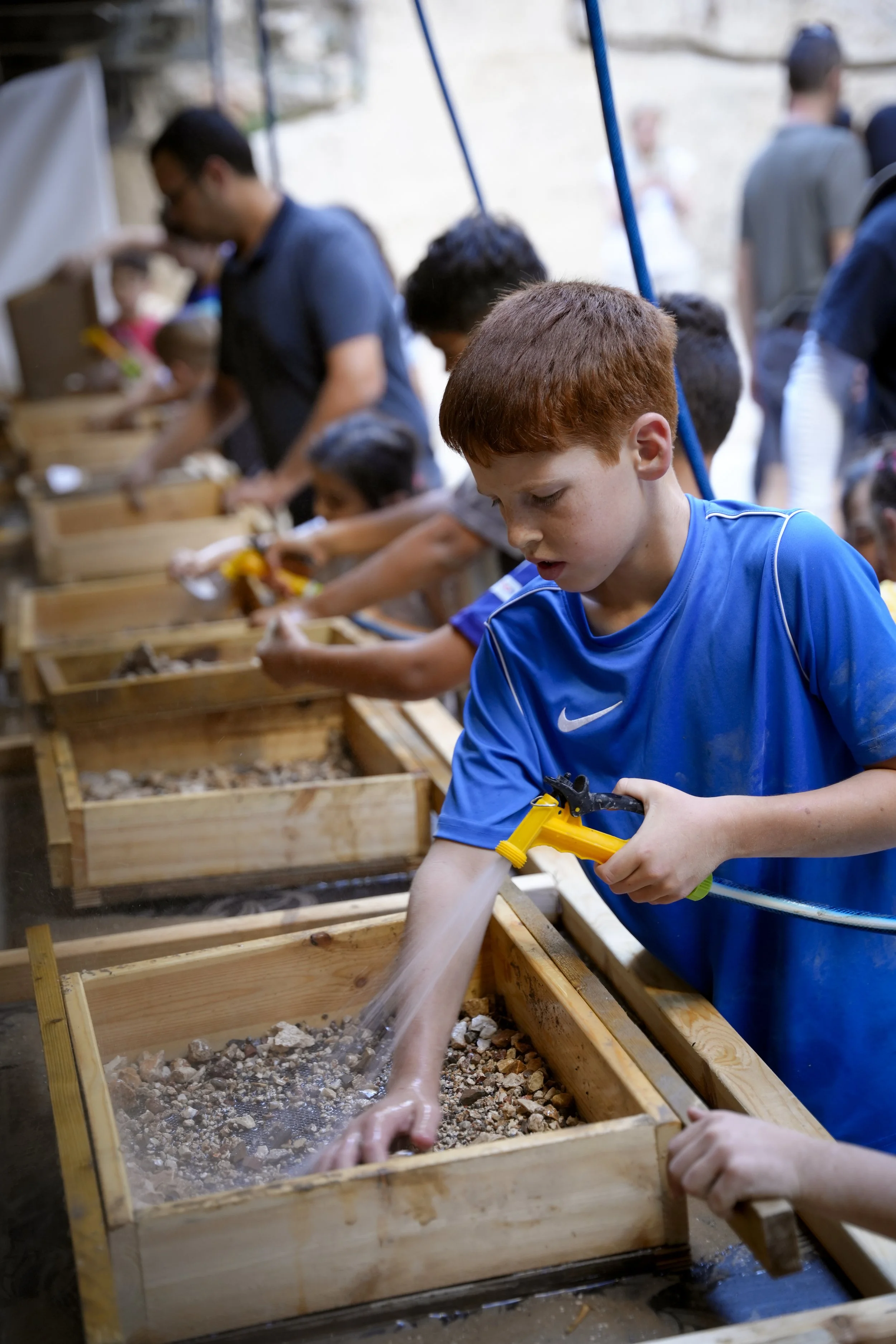
Soil-sifting activity from the Kishle excavation at the Tower of David Jerusalem Museum. Credit: Riki Rachman, Tower of David Jerusalem Museum