
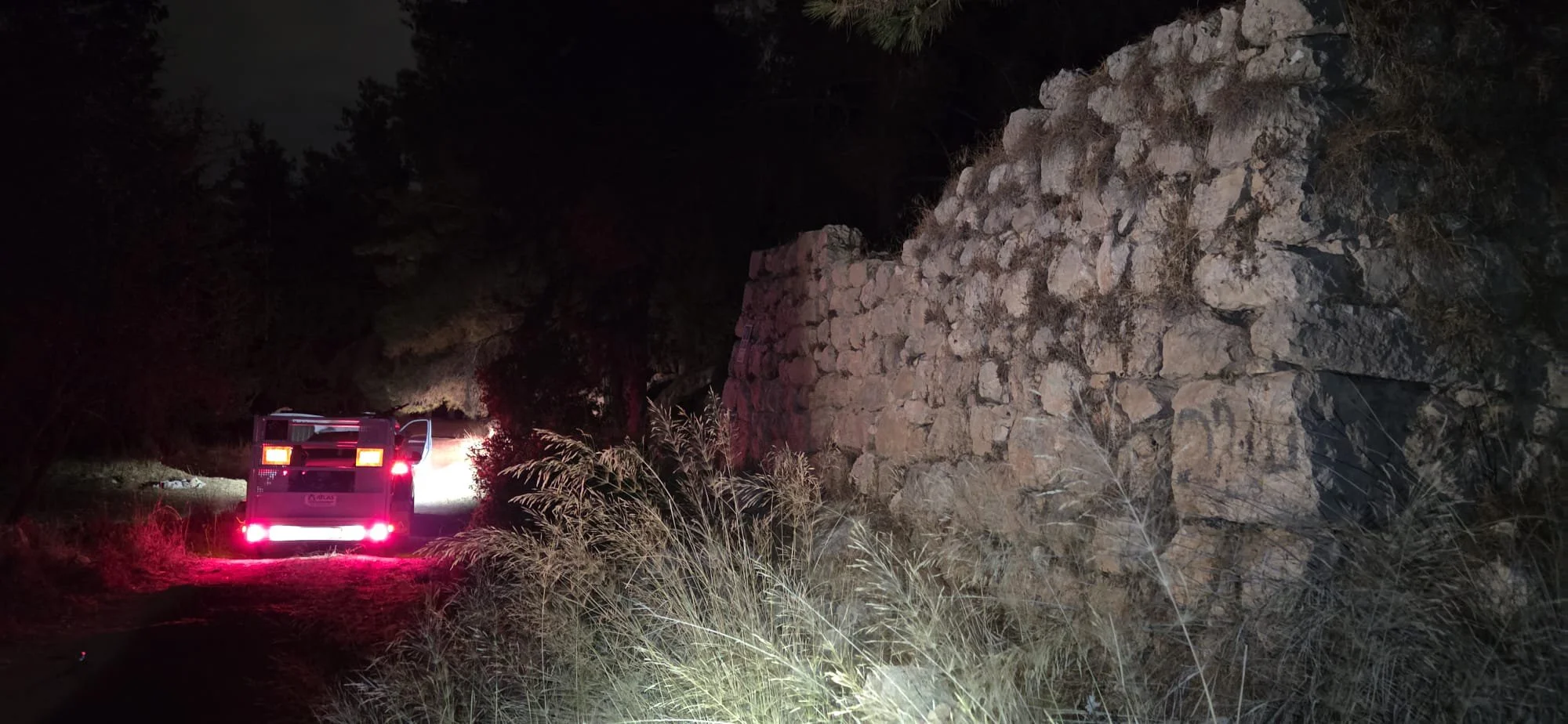
Inspectors from the Israel Antiquities Authority's Looting Prevention Unit have captured six antiquities theft suspects in Begin Park, near Mevo Beitar. While some gang members dug inside an ancient cistern, apparently others were above ground next to a lit campfire, presenting the guise of an innocent picnic. Their illegal excavation caused irreparable damage to the ancient site.
Six suspects were arrested last weekend for the theft of antiquities and damaging an archaeological site, during an operational activity by inspectors of the Israel Antiquities Authority (IAA) Looting Prevention Unit at the Horbat Adash site, near the town of Mevo Beitar in the Judean Hills.
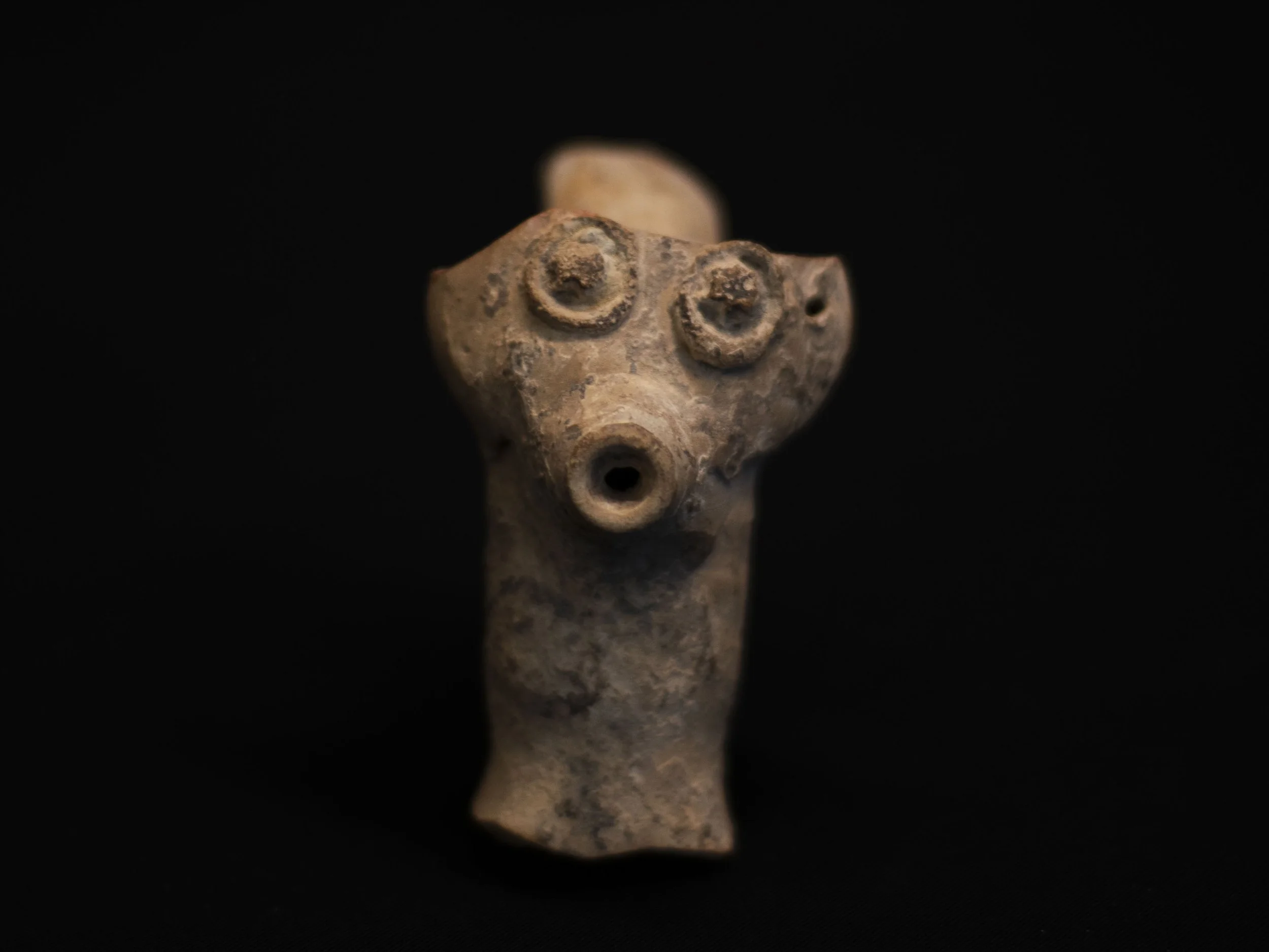
The neck of an ancient vessel shaped like an animal, discovered at the site. Photo: Yoli Schwartz, Israel Antiquities Authority
The suspected thieves were caught red-handed, while allegedly engaged in illegal excavation inside an ancient cistern, approximately 9 meters below ground level. The six arrived at the site equipped with extensive excavation equipment, including a generator, an electric jackhammer, augers, digging tools, a long ladder, and lighting equipment. Numerous ancient finds were found inside the cistern, including fragments of hundreds of pottery vessels, several stone vessels, and a fragment of a zoomorphic vessel with a neck shaped like an animal that dates back to the Early Muslim period. The abundance of finds from different periods in the cistern indicates that, apparently, at some point in antiquity, it ceased its original function and became a refuse pit.
It is suspected that while some members of the squad were digging inside the deep water cistern, the others stayed on the surface next to a lit campfire, attempting to disguise the activity as an innocent picnic.
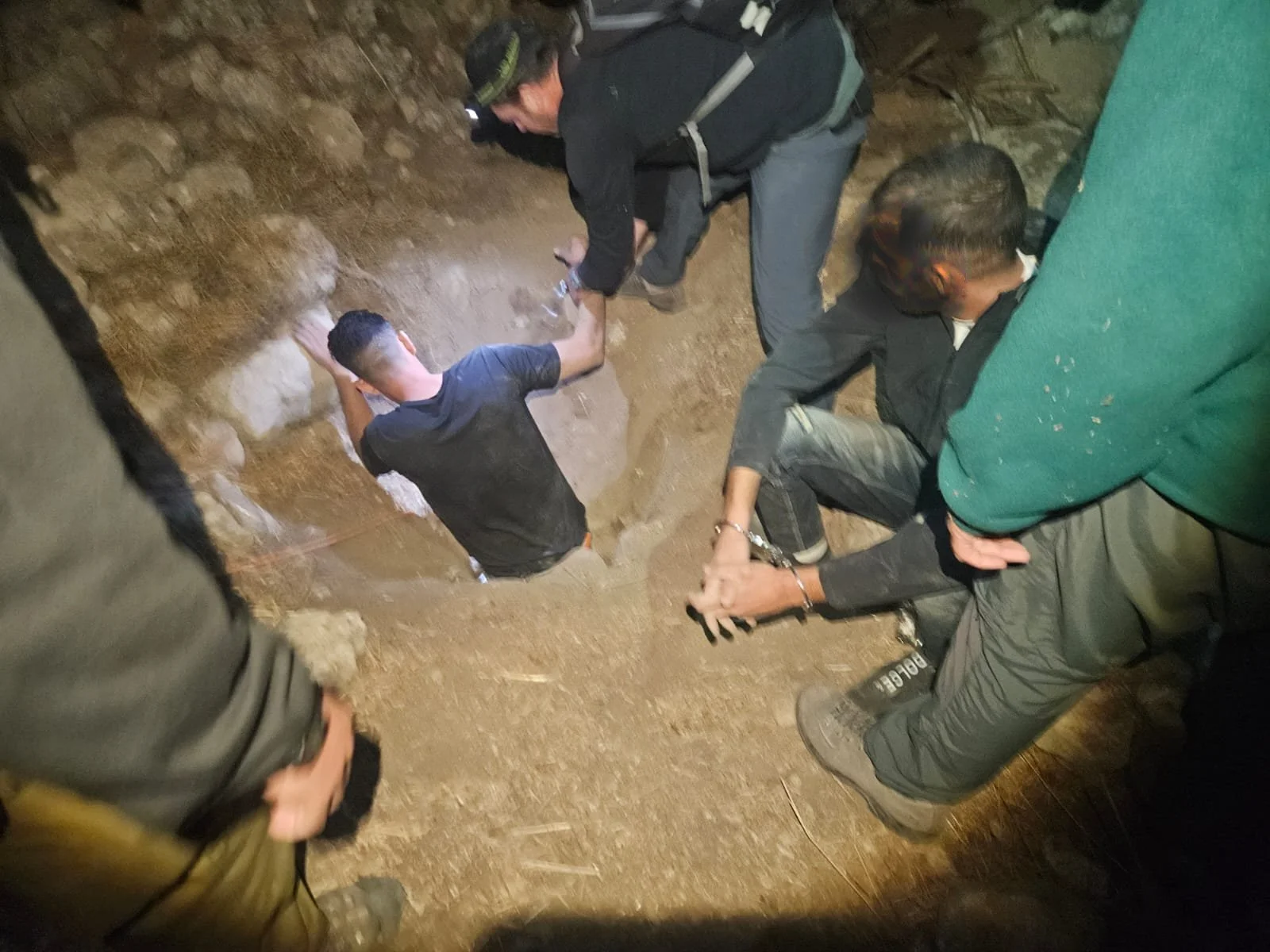
The moment the suspects were apprehended. Photo: Israel Antiquities Authority's Theft Prevention Unit
Horbat Adash is a declared archaeological site, containing the remains of an ancient settlement that existed almost 1000 years, from the Second Temple period in the 1st century BCE through to the Early Muslim period in the 8th century CE. A hewn double-entrance public purification bath, remains of buildings, water systems, industrial installations, and an Early Muslim period public building that served as a mosque were previously discovered here.
This illegal excavation caused irreversible damage. Extensive signs of destruction were evident in the area, which the suspects allegedly left during the break-in to the ancient cistern. Inside the cistern itself, its walls and bottom were damaged, breaking ancient plaster layers that had long been preserved in place. The Israel Antiquities Authority believes that the suspects hoped to find a treasure in the cistern.
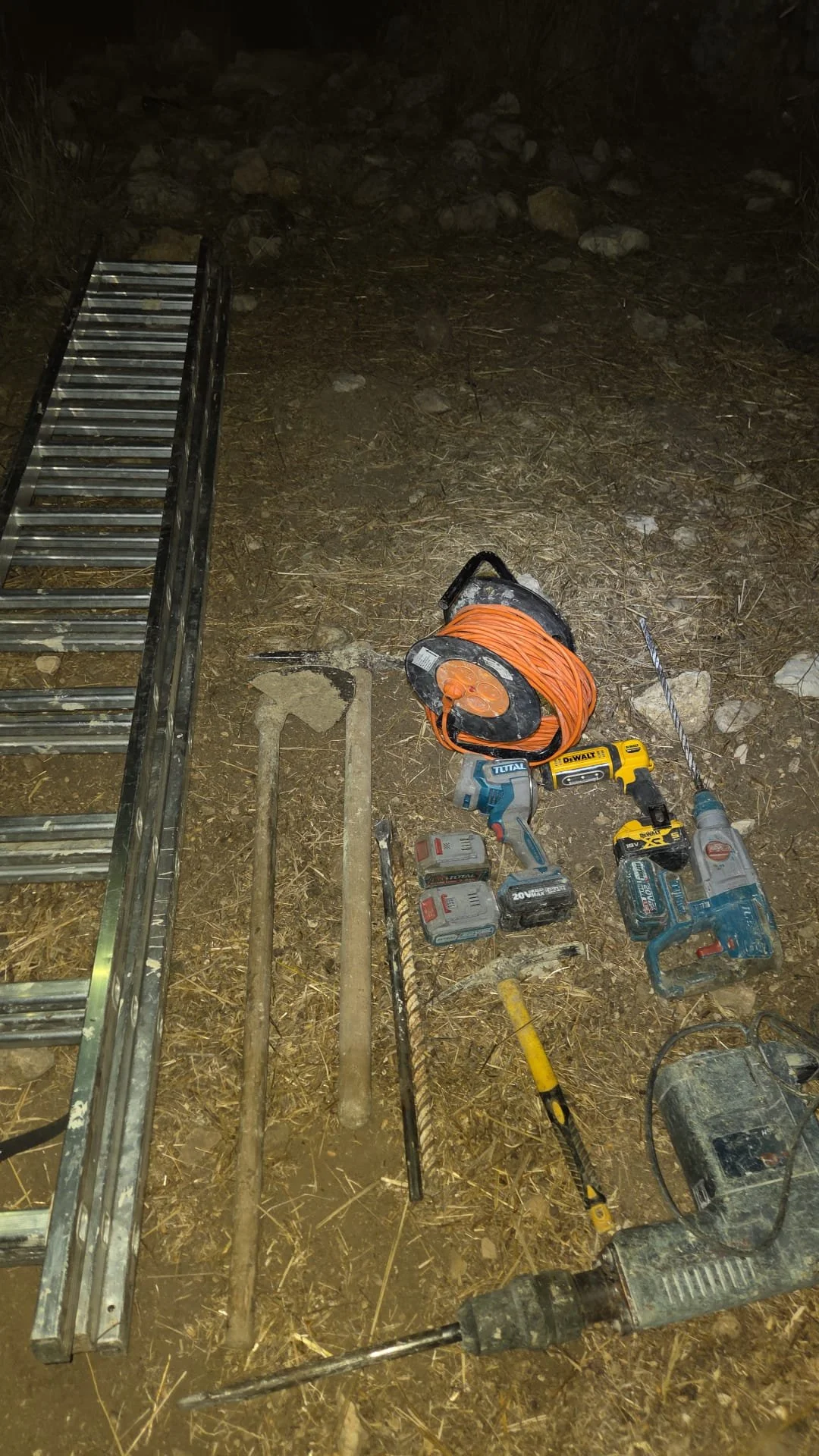
Excavation tools seized at the site.
Photo: Israel Antiquities Authority's Theft Prevention Unit
The six suspects were arrested on suspicion of damaging an antiquities site, a crime for which the statutory penalty is up to five years in prison, and were then taken to the police station and interrogated. Upon completion of the investigation, the case will be transferred to the Prosecution Office to consider filing an indictment.
According to Dr. Amir Ganor, Director of the Antiquities Robbery Prevention Unit at the Israel Antiquities Authority, “Unfortunately, legends about ancient treasures hidden in archaeological sites have recently become widespread on social media. These stories encourage people to go out and dig without a permit at archaeological sites, hoping to get rich quickly. However, the reality is completely different: illegal excavations cause irreversible damage to archaeological sites and findings. Ancient layers are destroyed; findings are displaced and disconnected from their archaeological context. That causes valuable historical information to be lost, which can never be restored. It is important that those who see treasure hunting as an innocent adventure should understand that this is a serious criminal offense, which may result in investigation, prosecution, heavy fines and even imprisonment. The damage caused to archaeological sites is damage to the heritage and history that belong to us all.”
Israeli Minister of Heritage, Rabbi Amichai Eliyahu, stated, “The ancient sites of the Land of Israel are not a free-for-all. We will not allow these sites to be turned into a playground for treasure hunters at the expense of our shared public heritage. The destroyers of history must and will be brought to justice. We will continue to fight looting, protect our cultural assets, and preserve the history of the Land of Israel for future generations.”
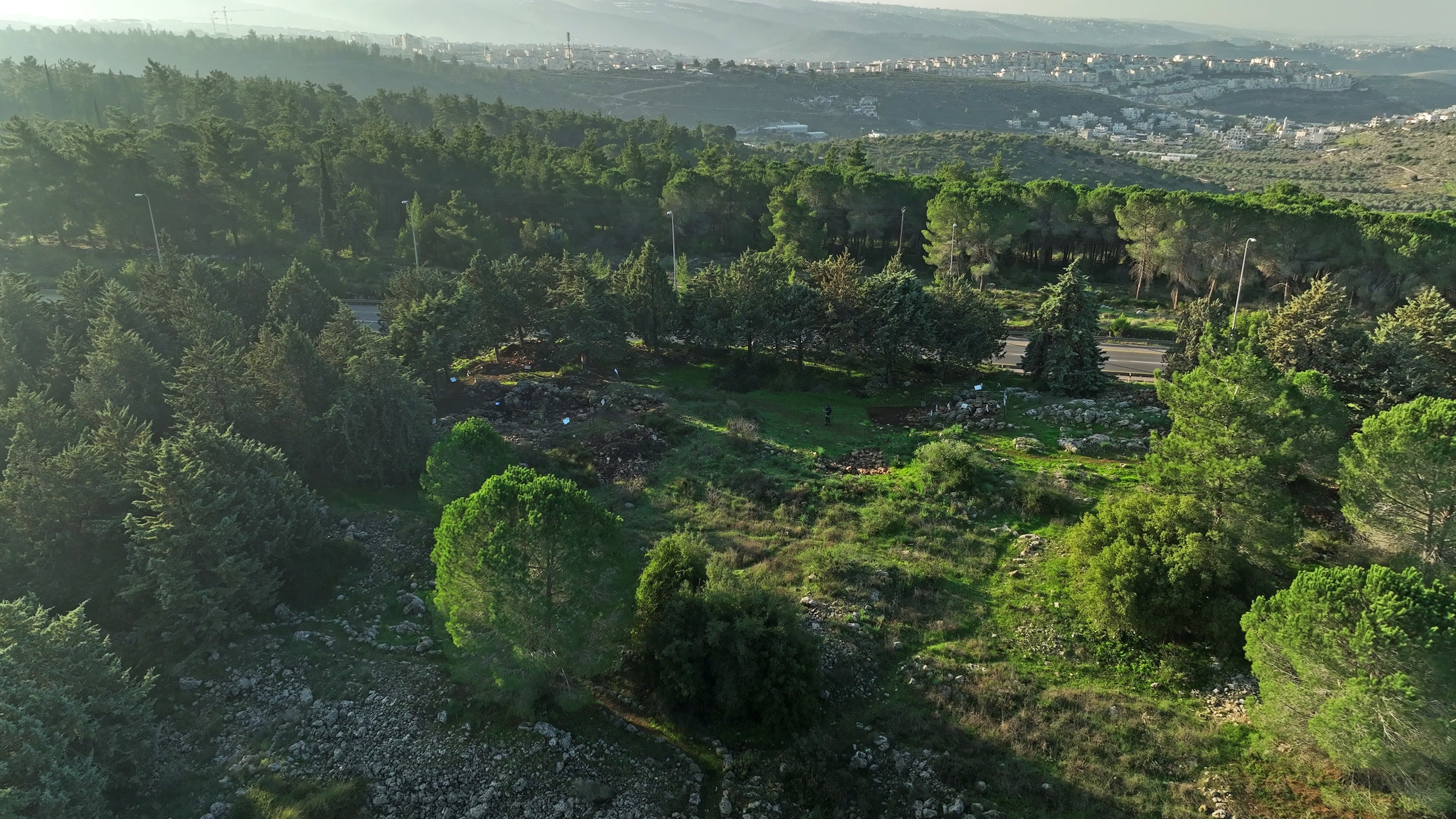
Begin Park in the Judean Lowlands. Photo: Emil Aladjem, Israel Antiquities Authority
Banner image: Horbat Adash on the night of the arrests. Photo: Israel Antiquities Authority's Theft Prevention Unit