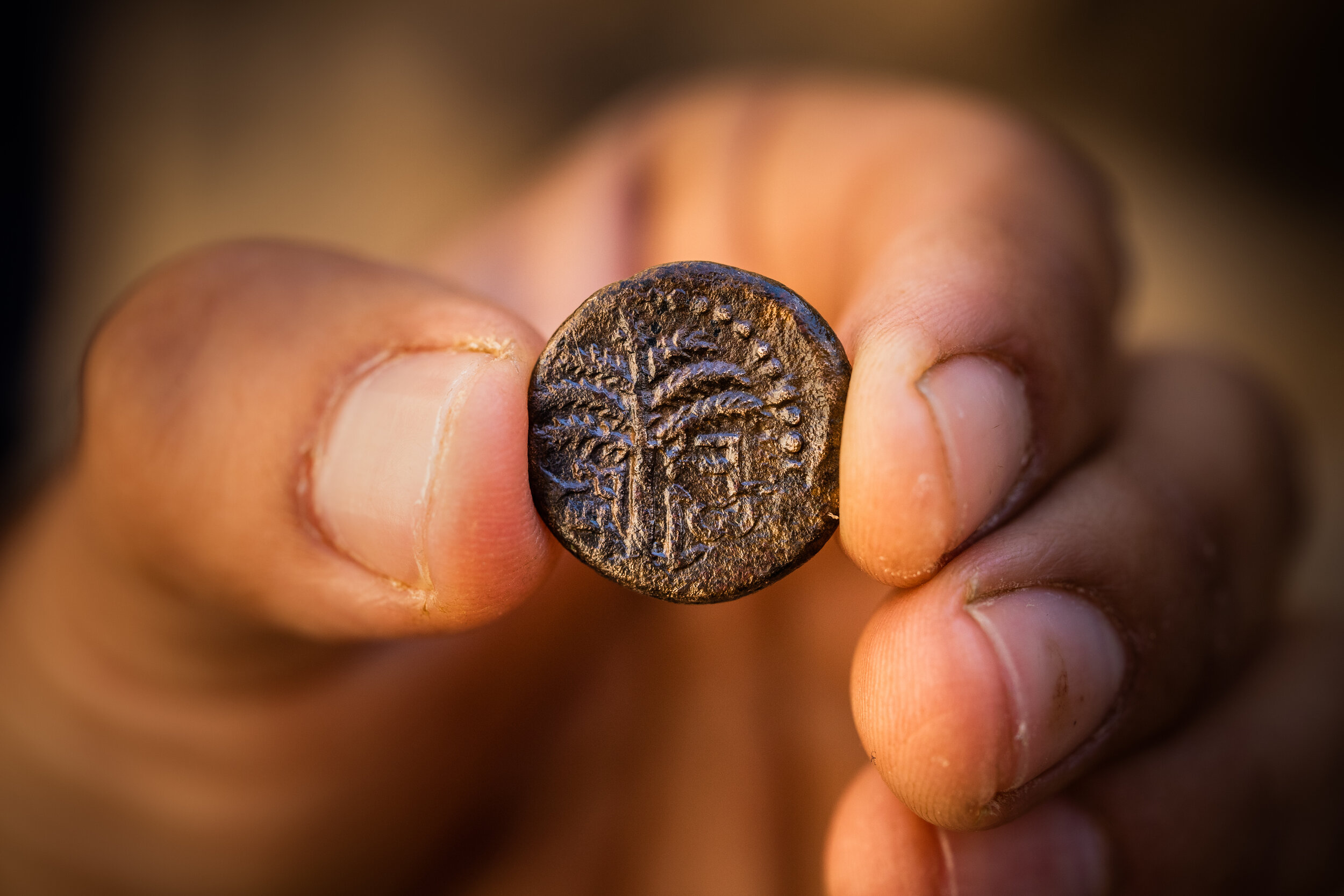

In honor of Jerusalem Day, the Israel Antiquities Authority and the Western Wall Heritage Foundation have revealed new and impressive archaeological discoveries uncovered under the lobby of the Western Wall Tunnels. According to the Archaeologists: “This is the first time such a system has been uncovered near the Western Wall”.
Archaeologists have begun to ponder about a new mystery near the Western Wall: Why did people invest such huge efforts and resources in hewing such an impressive subterranean system 2,000 years ago, while life was going on in the homes above-ground?
This system, the first of its kind uncovered in the area of the Western Wall Plaza and Tunnels, was exposed in excavations conducted by the Israel Antiquities Authority in the “Beit Straus” complex, beneath the entrance lobby to the Western Wall Tunnels. The excavations at the site, renewed about a year ago, are being conducted as part of the work to prepare for a new and fascinating tour in addition to the classic Western Wall Tunnels tour run by the Western Wall Heritage Foundation. Researchers suppose that the complex was used by Jerusalem residents during the Early Roman period, prior to the destruction of Jerusalem and the Second Temple. The system was sealed beneath the floor of a large and impressive structure from the Byzantine period, waiting for some 2,000 years to be discovered.
The discovery was made by students of a pre-military preparatory program in Jerusalem. The students have been integrated in archaeological digs as part of the Israel Antiquities Authority’s educational policy, wishing to connect youth with their past. The system they discovered is composed of an open courtyard and two rooms arranged in three levels one above the other and connected by hewn staircases.
Dr. Barak Monnickendam-Givon and Tehila Sadiel, directors of the excavation on behalf of the Israel Antiquities Authority, said: “This is a unique finding. This is the first time a subterranean system has been uncovered adjacent to the Western Wall. You must understand that 2,000 years ago in Jerusalem, like today, it was customary to build out of stone. The question is, why were such efforts and resources invested in hewing rooms underground in the hard bedrock?” According to Dr. Monnickendam-Givon and Sadiel “The rich array of findings discovered in this excavation shed light on the daily life of the residents of the ancient city. Among other things, we found clay cooking vessels, cores of oil lamps used for light, a stone mug unique to Second Temple Period Jewish sites, and a fragment of a qalal – a large stone basin used to hold water, thought to be linked to Jewish practices of ritual purity”
Mordechai (Suli) Eliav, Director of the Western Wall Heritage Foundation said in response to the findings uncovered: “I am excited, on the eve of Jerusalem Day, to reveal to the Jewish nation a new treasure trove of impressive and fascinating findings that shed light on life in Jerusalem throughout the generations in general, and on the eve of the destruction in particular. This finding epitomizes the deep connection of Jews with Jerusalem, their capital. Even when there were physical limitations, prayer at the foot of the remnant of our Temple never ceased, and this is tangible evidence of this.”
At the entrance to the rock-cut complex, depressions were found that were meant to firmly fix door hinges and bolts. Round and square niches were carved into the walls along with small triangular niches for oil-lamps, as well as elongated carving for shelves. These findings allude to the rock-cut system being for daily use. “Perhaps it served as a pantry for an overhead structure that didn’t survive, or as a hewn space that allowed for subterranean living”.
The rock-cut system was completely covered by a plain white mosaic floor of a monumental and extremely impressive public structure built at the end of the Byzantine period about 1,400 years ago, renovated during the Abbasid period about 1,250 years ago.
The frequent renovations of the structure and its destruction reminded one of the Israel Antiquities Authority team members, Michael Chernin, of a letter from the Cairo Geniza dated back to the 11th century CE regarding the renovation of a synagogue in Jerusalem after the earthquake of 1035 CE. The renovation was undertaken thanks to a donation from the Jewish community of Tyre, Labanon to the Jewish community of Jerusalem.
Toward the Fatimid period (11th century CE), the structure was destroyed and the findings in it were covered by a huge Collapse, until being exposed during these archaeological excavations.
The Beit Straus complex is named for the philanthropist Nathan Straus who purchased the structure near the Western Wall at the beginning of the 20th century and turned it into a soup kitchen that fed the poor of the city. As publicized earlier this year, Straus, the Israel Antiquities Authority conducted archaeological excavations at the site during 2013-2015, headed by Dr. Peter Gendelman and Ortal Chalaf, during which a beautiful and preserved column capital from the Second Temple period was found. The excavations at the site, which aimed at connecting Beit Straus with the excavations under the Western Wall Heritage Center, were renewed in 2019, led by Dr. Barak Monnickendam-Givon, Tehila Sadiel, Michael Chernin and Ortal Chalaf. According to Dr. Monnickendam-Givon: “The excavations at Beit Straus, under the lobby of the entrance to the Western Wall Tunnels, reveal Jerusalem in its glory: Jerusalem of people, religions, and a variety of groups who lived, worked, built, and glorified Jerusalem throughout the generations.”